Showing posts with label Six Degrees. Show all posts

Six Degrees of Separation (Jan): From Brooklyn Colm Toibin to Orbital Samantha Harvey

 The meme is hosted by Books are My Favourite Best and is described thus: On the first Saturday of every month, a book is chosen as a starting point and linked to six other books to form a chain. Readers and bloggers are invited to join in by creating their own ‘chain’ leading from the selected book. Each person’s chain will look completely different. It doesn’t matter what the connection is or where it takes you – just take us on the journey with you.


This month is wildcard month, with the request that we start with either the last book in our December chain, or the last book that we read in 2025. I didn't participate in the meme in December, so I am starting this month with the last book I read in 2025, which was Brooklyn by Colm Toibin. I was very taken with this book, as I am sure many other people have been before me. It follows the story of Eilis, a young Irish woman who migrates from Ireland to New York in the 1950s in search of work and a new life. It's about migraton and homesickness and understanding where you belong in the world.  It was so easy to read, I felt I slipped into the world and didn't emerge again until the novel was complete. 


Devotion by Hannah Kent (referenced hereis another beautiful and this time lyrical work of fiction about migration of people looking for a new life and a protagonist who is driven to remain where she feels she belongs, alongside those that she loves. 


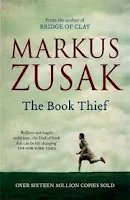
The Book Thief by Markus Zusak (my review here). Without saying too much, the beyond the grave narration in The Book Thief connects it in my mind to Devotion  by Hannah Kent, not to mention that they are both written by two of my faviourite Australian authors. 


Unfinished Business by Sulari Gentill (my review here). This is a bit of a jump, but this came to mind next because it is authored by another Australian author who I have read a lot of. I particularly love Gentill's Rowland Sinclair Mysteries, but I thought of Unfinished Business because I have been reflecting on my 2025 reading and particularly on the high concenration of crime fiction that I explored. 


Heavenly Pleasures by Kerry Greenwood. I turn next to Heavenly Pleasures as it was the last work of crime fiction that I read in 2025. Kerry Greenwood's Phryne Fisher series has a special place in my heart and I was upset to hear of her passing earlier this year. I decided to explore her Corinna Chapman series and  was disappointed to find that I didn't enjoy it all. There was so much minute description of everything that the characters did - from opening doors and watching television to cooking dinner and doing the laundry. I think that was part of what the charm of the series is supposed to be but I was bored by it. 


Green Dot by Madeleine Gray (my review here). What connects Heavely Pleasures to Greent Dot is that they are both rooted in their respective cities, Melbourne of Heavely Pleasures and Sydney for Green Dot, and both use real landmarks and streets and suburds to situate their stories in real contemporary Australia. In both books the city is an important part of the setting the mood of each novel. With Green Dot in particular I was familiar with many of the places and suburbs mentioned which contributed to how I visualised the novel as I read. 


Orbital by Samantha Harvey (referenced here). Not an obvious choice but Harvey in Orbital equally created a strong sense of place, albeit in an unconventional way. Rather than being set in a city or even a country, Orbital is set in a shared shifting envirfonment of a space station. There is constant movement as the world spins underneath them, and yet the characters and still and unmoving in their small cacoon above us all. 


Six degrees of separation (Nov): From We have Always Lived in the Castle to Bel Canto

The meme is hosted by Books are My Favourite Best and is described thus: On the first Saturday of every month, a book is chosen as a starting point and linked to six other books to form a chain. Readers and bloggers are invited to join in by creating their own ‘chain’ leading from the selected book. Each person’s chain will look completely different. It doesn’t matter what the connection is or where it takes you – just take us on the journey with you.


This month’s chain starts with We Have Always Lived in the Castle by Shirley Jackson. Not only have I never read this, but I've never even heard much about before now. From what I understand, it’s a gothic story about two sisters living in isolation after a family tragedy. It sounds eerie and full of dark family secrets. 


That immediately makes me think of The Turn of the Screw by Henry James, another unsettling tale in which an isolated house becomes a character of its own. 


From there, I’m moving to Rebecca by Daphne du Maurier, which also has the grand house, the secrets, the ever-present sense of dread. 


My next link is Jane Eyre by Charlotte Brontë. Both books centre on young women discovering their strength amid loneliness and mystery. And of course, there’s the appeal of a dark, brooding man with secrets.


From Jane Eyre, I’m leaping to Wide Sargasso Sea by Jean Rhys, which tells the story from the other side of Mrs Rochester. I didn't enjoy this books at all but it does reframe a classic and remind us that every story depends on who’s telling it.


That brings me to The Book Thief by Markus Zusak, one of my very favourite books of all time and happily voted as number 2 in the ABC Radio National's Top 100 Books of the 21st Century recent countdown. I thought of this one because it is a story that commonly appears in fiction, but reframed as a tale told from the perspective of death - that tells the story of a family brought together by circumstance and having to come together i nextreme circumstances. It's above love and what it means to be human.


Finally, that leads me to Bel Canto by Ann Patchett, which is less about what happens and more about the people at its heart. It’s a story about strangers drawn together by crisis, learning to create a kind of family out of circumstance.


So there’s my chain. It's perhaps a little dark but if I were trying to think in a good light I would say that they about connection and people trying to make sense of those around them. 

Six Degrees of Separation (Oct): I Want Everything to Every Secret Thing by Marie Munkara

  The meme is hosted by Books are My Favourite Best and is described thus: On the first Saturday of every month, a book is chosen as a starting point and linked to six other books to form a chain. Readers and bloggers are invited to join in by creating their own ‘chain’ leading from the selected book. Each person’s chain will look completely different. It doesn’t matter what the connection is or where it takes you – just take us on the journey with you.


This month we begin with I Want Everything by Dominic Amerena. Although I own this book, I haven't read it yet. I have started it but found it a bit hard to get into and moved onto something else. I did see Dominics Amerena at the Sydney Writers' Festival 2025, speaking on a panel for debut authors. For anyone curious, here is a link to my post about the panel event


Green Dot by Madeleine Grey
The compare of the event was Madeleine Gray, an Australian author who wrote Green Dot which I read earlier this year. I really enjoyed Green Dot: Hera’s affair with her older, married boss plays out as a slow unraveling. It's a story about some coping with the inconsistency between what she thinks her life should be, and what her life actually is. 

Bliss by Peter Carey
Bliss by Peter Carey is what then comes to mind. It's a novel about man who realises that his life isn't what it seems and isn't what he wants. A crisis of meaning I suppose you could say - but in a slightly different context to what we see in Green Dot. 

The Secret River by Kate Grenville 
A weird shift perhaps. At first I couldn't quite put my figure on why I thought of The Secret River next, but I think it's because in Bliss the protagonist questions the life that he has built and in The Secret River that moral discomfort is felt more so by the reader watching the immoral acts of the colonists as they invade and take what isn't theres. It could also just be the Australian connection. 

The Memory Keeper’s Daughter by Kim Edwards 
OK, hear me out. I've gone to the Memory Keeper's Daughter because they are both about control. The Secret River is about control of land and lives. The Memory Keeper's Daughter is also about control of the lives of others. Who gets to decide what is best for others and who faces the consequences of those decisions. 

100 Years of Betty by Debra Oswald
Both of these novel revolve around children separated from their mothers because of societal pressures and shame. In The Memory Keeper’s Daughter a father decides to hide his daughter’s disability by giving her away at birth.Iin The 100 Years of Betty, the protagonist's decision to givs up her baby for adoption is also shaped by the harsh moral expectations of her time. 

Every Secret Thing by Marie Mukara
I read this one a long time ago. In Every Secret Thing the theme of forced familial separation is even more central. Munkara writes from lived history: Aboriginal children removed from families, cultural dislocation, the mission system. It’s a more painful reflection on the cost of forced familial separation, especially when identity is not just personal, but deeply communal.


Six Degrees of Separation (Aug): From The Safekeep to Australian Poems to Read to the Very Young

 The meme is hosted by Books are My Favourite Best and is described thus: On the first Saturday of every month, a book is chosen as a starting point and linked to six other books to form a chain. Readers and bloggers are invited to join in by creating their own ‘chain’ leading from the selected book. Each person’s chain will look completely different. It doesn’t matter what the connection is or where it takes you – just take us on the journey with you.


This month we start with the 2025 Winner of the Women's Prize for Fiction: The Safekeep by Yael van der Wouden.  


I read this very recently and you can read my review here


The book is described:


An exhilarating tale of twisted desire, histories and homes, and the unexpected shape of revenge – for readers of Patricia Highsmith, Sarah Waters and Ian McEwan’s Atonement. It is fifteen years after the Second World War, and Isabel has built herself a solitary life of discipline and strict routine in her late mother’s country home, with not a fork or a word out of place. But all is upended when her brother Louis delivers his graceless new girlfriend, Eva, at Isabel’s doorstep – as a guest, there to stay for the season… In the sweltering heat of summer, Isabel’s desperate need for control reaches boiling point. What happens between the two women leads to a revelation which threatens to unravel all she has ever known.


Rebecca by Daphne du Maurier First stop: Rebecca by Daphne du Maurier. I've chosen a classic gothic novel here. The unnamed second Mrs. de Winter arrives at Manderley and is haunted (metaphorically) by the presence of Rebecca. This is perhaps my favourite book. Like The Safekeep, it's about a woman’s identity blurring and a house filled with heavy memories. My review

The Little Stranger by Sarah Waters Second stop: The Little Stranger by Sarah Waters. Another mystery unravelling in a British manor, this one falling into decay and, like The Safekeep, set after the war. A doctor becomes entangled with a family struggling with a perceived haunting. My review.

The Secret River by Kate Grenville Third stop: The Secret River by Kate Grenville. I'm not quite sure why this one came to mind next. It brings us to early Australian invasion history, where a man stakes a riverbank and builds a life on stolen lands. I think perhaps it's the wilful ignorance and moral consequences of theft that connects the books in my mind. There is definitely a common theme of moral reckoning across history. My review.

The Timeless Land by Eleanor Dark Fourth stop: The Timeless Land by Eleanor Dark. The Timeless Land expands the scope to a broader historical setting. While The Secret River offers an intimate perspective on one family’s journey, Dark’s novel provides a sweeping account of the first years of British invasion from multiple viewpoints, including the Aboriginal peoples. Like Grenville, Dark grapples with the complex legacies of settlement and challenges the dominant narratives of Australian history. I was actually interviewed on Radio National about this book. My review

Blinky Bill by Dorothy Wall Fifth stop: Blinky Bill by Dorothy Wall. The Timeless Land holds a special place in my own history. It was my grandmother’s favourite book; one she treasured and reread many times. This personal connection leads me to Blinky Bill, another Australian classic, but from a very different angle. Blinky Bill is a children’s story centred on the adventures of a mischievous koala, embodying a playful and irreverent spirit of one type of Australian childhood. The copy I have belonged to my grandmother, linking these two books through family.

Australian Poems to Read to the Very Young Sixth stop: Australian Poems to Read to the Very Young. From the whimsy of Blinky Bill, for me the chain naturally moves to Australian Poems to Read to the Very Young. This collection of poems is deeply embedded in my own childhood memories, and I can still recite many by heart. Like Blinky Bill, it evokes a sense of place and identity shaped by the landscape and language of Australia. Just reading one of these poems returns me to special moments in my childhood.

Six Degrees of Separation (July): Theory and Practice to Babel: Or The Necessity of Violence

The meme is hosted by Books are My Favourite Best and is described thus: On the first Saturday of every month, a book is chosen as a starting point and linked to six other books to form a chain. Readers and bloggers are invited to join in by creating their own ‘chain’ leading from the selected book. Each person’s chain will look completely different. It doesn’t matter what the connection is or where it takes you – just take us on the journey with you.


This month starts with Theory and Practice by Michelle de Kretser:

In the late 1980s, the narrator of Theory & Practice—a first generation immigrant from Sri Lanka who moved to Sydney in her childhood—sets up a life in Melbourne for graduate school. Jilted by a lover who cheats on her with another self-described "feminist," she is thrown into deeper confusion about her identity and the people around her.

I admit to only having read one book by Michelle de Kretser, The Lost Dog and I wasn't enamoured with it. I know I've read so many good things about Theory and Practice, but I don't think it will be high on my priority list. 


Babel The Time Traveller's Wife The Vintner's Luck
The Book Thief Kevin Deathly Hallows
A favourite book of mine by an Australian author - The Book Thief by Markus Zusak (my review here). Love it, everyone should read it, one of my all-time favourite books. I could rave all day about this. 

Another book that begins at the end: We Need to Talk about Kevin by Lionel Shriver (my review here). This novel is epic. It had me completely hysterical at the end. I remember calling my husband crying and worrying him that something was really wrong. It was, but fortunately just in the story. 

I also cried like a baby in Harry Potter and the Deathly Hallows by JK Rowling (my review here), when Dobby died. He died a hero's death, but goodness it was heartbreaking. 

Another tearjerker - The Time Traveller's Wife by Audrey Niffenegger (my review here). I love this book. One my absolute favourites and I would read it more often if it wasn't right at the top of my bookcase where I can't reach it. 

I am noticing a theme that a lot of the books that I would say are my favourite also make me cry. I will have to do some self-reflection about this at a later date. 

With that in mind, another favourite book but this time one that didn't make me cry: The Vintner's Luck by Elizabeth Knox (my review here). I've never met anyone else who has read this so if you have, please make yourself known! Similar to The Time Traveller's Wife it's a magical realism novel, but in this case it's not time travel but a vintner in the early 19th century who makes friends / falls in love with an angel. Sounds weird, but its beautiful. 

Finally, the most recent book that I read that could be considered magical realism was Babel: Or the Necessity of Violence by Rebecca F Kuang (my review here). Wonderful deep dive into the question of how necessary violence is to bring about real, important, and necessary social change. Definitely a relevant question for today. 


Six Degree (June) 2025 Women’s Prize for Fiction, All Fours by Miranda July.

The meme is hosted by Books are My Favourite Best and is described thus: On the first Saturday of every month, a book is chosen as a starting point and linked to six other books to form a chain. Readers and bloggers are invited to join in by creating their own ‘chain’ leading from the selected book. Each person’s chain will look completely different. It doesn’t matter what the connection is or where it takes you – just take us on the journey with you.


This month starts with All Fours by Miranda July, which has been shortlisted for the Women's Prize for Fiction 2025. It is described as: 

"A semifamous artist announces her plan to drive cross-country, from LA to New York. Twenty minutes after leaving her husband and child at home, she spontaneously exits the freeway, beds down in a nondescript motel, and immerses herself in a temporary reinvention that turns out to be the start of an entirely different journey."


I hadn't heard of this until this month's Six Degrees of Separation. However, the envisaged long cross-country drive in All Fours made me immediately think about The Bean Trees by Barbara Kingsolver, which I read last year. It's Kingsolver's first novel and is the story of a young woman named Taylor who takes a cross-country drive that leads to an unexpected turn in her life.


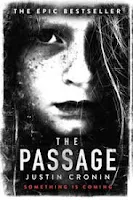
Keeping to the theme of cross-country drives, I can't go past The Passage by Justin Cronin, a post-apocalyptic novel set around a zombie-apocalypse (of sorts). The early stages of The Passage depict a road trip taken by FBI Agent Brad Wolgast, as he seeks to rescue and protect a small girl, Amy, from the federal government. I won't spoil it too much, but I honestly love this book and it's still one of my favourites. Sadly, the sequels didn't measure up, which is often the case.


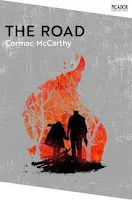
The Road by Cormac McCarthy. It's another post-apocalyptic novel about a father and his son journeying across America after an event has wiped out most of humankind. I read this quite some time ago and remember it being very bleak and dark. There's something about post-apocalyptic novels that create such a great setting for a long journey across country.


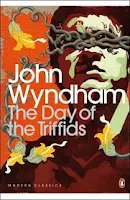
The Day of the Triffids by John Wyndham, another of my favourites and another post-apocalyptic novel with a road trip—this time by the narrator Bill Masen and a woman he rescues from captors, Susan. Together they travel across England looking for other survivors to band together with and fight for survival.


Finally, you just can't go past The Hobbit by J.R.R. Tolkien when it comes to talking about long cross-country trips. I mean – Bilbo crosses Middle Earth on his own path and journey. An epic tale of courage, friendship, and the battle between good and evil.


And of course, The Lord of the Rings by J.R.R. Tolkien, where Frodo embarks on a perilous cross-country journey across Middle Earth to destroy the One Ring. Another legendary epic full of adventure and high stakes. Chef’s kiss.


I look forward to reading what everyone else had come up with for this month. Feel free to review my posts about the Sydney Writers Festival which I attended recently. At Big Beginnings I saw Kaliane Bradley (The Ministry of Time), Ferdia Lennon (Glorious Exploits) and Dominic Amerena (I Want Everything) speak about their journey to publishing their debut novels. At Untrue Crime I saw Ian Rankin, Kate McClymont and Shankari Chandran (Unfinished Business) speak about the important of truth and authenticity in crime writing. 

Six Degrees of Separation (May): Rapture to At Home by Bill Bryson

The meme is hosted by Books are My Favourite Best and is described thus: On the first Saturday of every month, a book is chosen as a starting point and linked to six other books to form a chain. Readers and bloggers are invited to join in by creating their own ‘chain’ leading from the selected book. Each person’s chain will look completely different. It doesn’t matter what the connection is or where it takes you – just take us on the journey with you.


This month's six degrees starts with Rapture by Emily Maguire, the story of a girl who disguised herself as a monk to live in a monastery and avoid the life of a wife or nun. I haven't read Rapture yet, but I have read many positive reviews about the book.

The first link is a little boring perhaps - but Wicked by Gregory Maguire comes straight to mind just as a result of the matching surname. I read and reviewed it in 2009, in the early days of my first blog Page Turners. Although I don't recall much of the specifics of the plot anymore, I recall the impact it had on me at the time. It was dark and visited me in my dreams and made me ponder the difference between good and evil. I saw the movie recently with my daughter and I think that it might be time to revisit the book some time soon.


I can't help it, next is The Wizard of Oz by Frank L Baum. This was a quick fun read from 2009 as well, that oddly enough I read for the first time after I read Wicked. The book was great, but it's hard to go past the movie, which played such a big role on repeat in my childhood. One of my primary school memories is my sister bringing home an illustrated copy of the book from the school library. When my mother saw the book, she remembered owning a copy of the same book as a child herself and after a polite request the school librarian allowed her to keep the book rather than return it to the library.


Next is Father Frank by Paul Frank - the connection being in the name of Frank. I would be very surprised if anyone else has ever read this but it's one of my favourite easy reads. It's about a man who becomes a Catholic Priest (despite not believing in God) and drives a taxi part time to raise funds for his church. Eventually, a beautiful woman books his taxi and sparks fly. What is a Priest to do in such circumstances? It's just a bit of light-hearted romance but I love it.


Light-hearted romance? I have to think about Emma by Jane Austen. Perhaps not light-hearted in the same way, but certainly about romance and certainly very funny - laugh out loud funny. I think this is Austen's funniest novel.


Laugh out loud funny? That takes me straight to Notes from a Big Country by Bill Bryson. That man is hilarious, and I remember just absolutely cracking up the entire time I was reading this one.


This takes me straight to the last book of this chain, another Bill Bryson book - and that's At Home. I would really like to finish At Home, which tells the history of the family home room by room. I've started it, but it's such a door stopper I've never quite been able to get through it.


That's all from me - looking forward to June. 


Six Degrees of Separation (Apr): From Knife to Jasper Jones by Craig Silvey

The meme is hosted by Books are My Favourite Best and is described thus: On the first Saturday of every month, a book is chosen as a starting point and linked to six other books to form a chain. Readers and bloggers are invited to join in by creating their own ‘chain’ leading from the selected book. Each person’s chain will look completely different. It doesn’t matter what the connection is or where it takes you – just take us on the journey with you.


This is only the third time I have completed Six Degrees, but for me the journey through these reading experiences has actually been a little emotional for me - definitely a testament to the power of fiction, arising from a non-fiction starting point.


Knife by Salman Rushdie


This month the journey starts with Knife by Salman Rushdie, described by Penguin Books Australia as "a moving, life-affirming memoir about survival and the power of love to heal...". Knife is a memoir that explores the aftermath of the attempt on Rushdie's life in 2022. I've not read this book. In fact, I haven't read very many memoirs at all, although I know many people who read a lot of them.

Midnight's Children by Salman Rushdie


I have read two other books by Salman Rushdie – with Midnight's Children being the stand-out for me. I remember at the time that I read it feeling as though it was one of the best books I had ever read, although it's been many years since I visited it, and the feeling has faded. It falls into the category of magical realism and is the story of Indian independence which is explored through the storytelling of Saleem – who, as a young boy, discovers that he has the power of telepathy and can communicate with other children born close to midnight on the date that India gains its independence. Thinking about this story now makes me think that I might like to re-read it this year.


The Time Traveler's Wife by Audrey Niffenegger

There is something about magical realism that I love, and it takes me to The Time Traveler's Wife by Audrey Niffenegger. The Time Traveler's Wife is the love story of Henry and Clare. Henry's rare genetic condition means that he involuntarily time travels, and his time traveling takes him to the past where he befriends a young girl called Clare – who eventually becomes his wife. When I first read this book, I cried like a baby. I think I have still cried in several re-readings since. There is something about it that is just so poignant – the human experiences of the characters as they live their lives together in as normal a way as possible. It's since been made into a movie and a TV series, both of which I've enjoyed but of course can't match the book. I have reviewed it here.


The Book Thief by Markus Zusak

Other books I have cried in. The first one that comes to mind is The Book Thief by Markus Zusak, an Australian author. This is still to this day one of my very favourite books. We came close to naming our son Rudy after one of the main characters in this story, that is narrated by Death and explores the German experience of WW2 through the eyes of the young Liesel and her family's attempt to save the life of a Jewish friend. I finished this book on a train and cried and cried. You can read my review here. 


Another book I cried uncontrollably in was We Need to Talk About Kevin by Lionel Shriver. If you've read the book, you can probably already understand the part that I mean. I remember being home alone and completely distraught and calling my husband for comfort. I could barely speak, and he thought something was very wrong until I could get out that it was the book that upset me so much. Any book that can evoke that kind of emotion is clearly worth a read. You can read my review here.


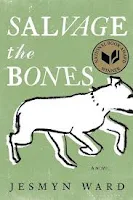
Salvage the Bones by Jesmyn Ward

At first, I couldn't quite figure out why, but the next book that came to my mind was Salvage the Bones by Jesmyn Ward. Salvage the Bones provides the reader with a heart-wrenching snapshot of family life in a poverty-stricken area of New Orleans in the days leading up to and including Hurricane Katrina. It's told from the perspective of a young teenage girl, who is experiencing her own personal hurricane when Katrina hits. What connects these two books for me is the theme of motherhood. Although each tells very different stories, they both explore motherhood in a deeply real way—truly demonstrating the complexities of what motherhood is and means—to both the mother and the child.


Jasper Jones by Craig Silvey

When I revisited my review of Salvage the Bones, I described it as an assault on my emotions—another aspect in keeping with both my experience of The Book Thief and We Need to Talk About Kevin.


Finally, Salvage the Bones has brought me to another Australian book, this time a young adult novel—Jasper Jones by Craig Silvey. They are both coming-of-age novels in their own way, both set in marginalised communities (one in modern-day New Orleans and the other in a small rural town in 1960s Australia), and both are narrated by teens experiencing their own personal upheaval. Both deal with important themes: social injustice, race, and identity. And Ward and Silvey give voice to characters who are vulnerable and overlooked in real life—and do so in an authentic and moving way.

Six Degrees of Separation (Mar): from Prophet Song to The Passage by Justin Cronin

The meme is hosted by Books are My Favourite Best and is described thus: On the first Saturday of every month, a book is chosen as a starting point and linked to six other books to form a chain. Readers and bloggers are invited to join in by creating their own ‘chain’ leading from the selected book. Each person’s chain will look completely different. It doesn’t matter what the connection is or where it takes you – just take us on the journey with you.


This month we begin with Prophet Song by Paul Lynch, the 2003 Booker Prize Winner. I read this last year and really enjoyed it, although I am not sure that 'enjoy' is the correct word for a book so dark. Prophet Song is a dystopian novel set in Ireland, as it endures a violent slide into a totalitarian state and a civil war. Now, I think the world fears that it may offer a glimpse of a possible American future, but I like to think positively. 


It does immediately bring to mind The Handmaid's Tale by Margaret Atwood, another dystopian novel about a totalitarian state. Atwood famously wrote this book using only the dark abuses that exist in our current world, combining them into one dystopian world full of horror and harm.


Trying but failing to keep move onto a lighter subject, I immediately thought of The Invisible Man by HG Wells. Elisabeth Moss being the obvious link here, having appeared in the tv adaptation of The Handmaid's Tale and the 2020 movie The Invisible Man. I am actually a big fan of old school science fiction, and I am partial to a bit of HG Wells, although The War of the Worlds is my personal favourite.


Now my mind is stuck on some of my favourite old school science fiction novels. The first is Nemesis by Isaac Asimov. I know that Asimov is probably more famous for some of his other novels, and I am very partial to the Space Ranger series, but Nemesis has just been one of those substantial science fiction novels with space travel, future civilisations and strong female characters that I can revisit over and over again. 


Then of course there is The Chrysalids by John Wyndham. This is my absolutely favourite Wyndam novel - a masterpiece set in a post-apocalyptic world following a nuclear disaster where society has become deeply religious and anyone born with any slight difference is consider impure and immediately outcast. If you haven't read this - I highly recommend it. You can read my full review here, where I gave it full marks and declared it one of my new favourite books of all time. 


This takes us to my final book of this month's entry - which is The Passage by Justin Cronin. The Passage is an exhilarating and tense post-apocalyptic story that spans the decades before and after a virus has been released by the US Military and destroyed the world as we know it - you can read my full review here. I absolutely loved this book when it came out, it was everything you could want from popular fiction; fast-paced, action-packed, enthralling and with skilled writing as well. The Passage is the first in a series, and unfortunately for me it was one of those series that just dropped the ball as it progressed. I would highly recommend reading The Passage but give the later books a miss. 

Six Degrees of Separation (Feb): from Dangerous Liaisons to Rebecca by Daphne du Maurier

I haven't participated in #6degrees previously, but as someone who suffers from FOMO, I couldn't help but want to join in. 


The meme is hosted by Books are My Favourite Best and is described thus: On the first Saturday of every month, a book is chosen as a starting point and linked to six other books to form a chain. Readers and bloggers are invited to join in by creating their own ‘chain’ leading from the selected book. Each person’s chain will look completely different. It doesn’t matter what the connection is or where it takes you – just take us on the journey with you.


February's #6degrees begins with Dangerous Liaisons by Pierre Choderlos de Laclos. Now I'm not going to lie, I haven't read this. Perhaps I should add it to my TBR list for 2025, but we'll see. My research does tell me that it's an epistolary style novel written in 1782, depicting all the depravity of the French nobility just prior to the French Revolution. 


This takes me directly to another epistolary style novel Frankenstein or the Modern Prometheus by Mary Shelley, which I have reviewed here. I absolutely loved this book. The beauty of Frankenstein is just how human Frankenstein's monster really is. He is a man who desires love and companionship. In his early years of being he seeks friendship and family. He wants people's approval and notice in order that he can become the man that he feels that he is. He is then deeply wounded by the sudden and cruel realisation that he is fated to a life of nameless isolation, where he will only ever be met with abhorrence and rejection. His grief and despair at this realisation force him to seek the assistance of the man that he himself despises, his creator, Viktor Frankenstein. It's also a true classic, having played a significant role in the development of the horror genre, as well as having an important place in romantic and gothic literature, and to a lesser extent science fiction as well. 


Speaking of monsters, another epistolary style novel but this time with the greatest vampire of all time: Dracula by Bram Stoker, which I have reviewed here. Creepy creepy creepy. But in a good way of course. I loved this book and there were times as I was reading that I nearly wanted to put it down because it was creeping me out so much. I do admit though that I loved the first half of the book at Count Dracula's castle so much more than the second half. 


So, while we are on a vampire theme, how can I go past Twilight by Stephanie Meyer, which I have reviewed here. Controversial I know. So many people disliked these books but when I first read them, I absolutely loved them and consumed them as fast as I could. It isn't until more recently that I reflect more poorly on them for the disconcerting depiction of a relationship that in real life would easily be considered one of domestic violence by way of coercive control. Although initially I loved it, now I worry about what lessons a younger generation takes from it about what a romantic relationship should be. 


What should a romantic relationship be like? Well, while I think it's easier to identify what it "should not" be like, what it "should" be like is much harder to pin down - what works will be different for everyone. But how can you go past Pride and Prejudice by Jane Austen. The slow build to true love - now that's romantic. Elizabeth and Darcy coming to know each other over time, and in the process coming to know themselves. Sigh. 


This takes me to my final choice, Rebecca by Daphne du Maurier. How did I get here? Not because of the common thread of romance, but because if someone asked me what my favourite book was and made me choose just one, I would be choosing between Pride and Prejudice and Rebecca by Daphne du Maurier. And I think that Rebecca would just win out. I have tried to review Rebecca in the past, but I just can't do it justice. From the very time I read that opening line "Last night I dreamt I went to Manderley again" I was hooked. The characters, the prose, the plot - it just gets me every time.