Showing posts with label Historical. Show all posts

Review: The Secret History of Christmas (2023) by Bill Bryson (audiobook)


 I've always loved Bill Bryson's works. I was introduced to his writing with A Short History of Nearly Everything and can still remember how laugh-out-loud funny Notes from a Big Country was. I say this as context for how excited I was when I stumbled across this free audiobook on Audible (a recent subscription I've been enjoying). I knew immediately The Secret History of Christmas would be perfect fodder for my long drives to and from the office, and I wasn't wrong. 


As the title suggests, this audiobook delves into the history of Christmas - from its origins in pagan times, through to its connection to the birth of Jesus and Christian traditions and then the rise of Jolly Old Saint Nicholas, aka Santa Claus, and the secular Christmas that most (here in Australia at least) enjoy today. My favourite chapter traces the history of Christmas foods through time, including the origins of the plum pudding (spoilter alert: it was plumless). And Bryson doesn't just explore the history of Christmas. He also delves into human psychology with a look at gift giving traditions of Christmas, thoughfullly considering gift giving for the giver and the recipient. 


Adding something special to the experience, Bryson himself narrates the audiobook, the benefit of which is that he knows exactly the perfect tone and inflection to make the listening experience a joyful one. He mades the humour, funnier and the wit, wittier. 


This could be a boring book of facts, but in Bryson's talented hands it's a joy to listen to and learn about the history of an annual holiday that brings so many people together. 


3 / 5 Enjoyable, readable and reliable. 


Review: Winter Garden by Kristin Hannah


Meredith and Nina Whitson are as different as sisters can be. One stayed at home to raise her family and manage the family apple orchard; the other followed a dream and travelled the world to become a famous photojournalist. But these two estranged women come together at their father's deathbed standing alongside their cold, disapproving mother, Anya, to hear the one last promise he extracts from the women in his life. 

 It begins with a story like no other. A captivating, mysterious love story that spans sixty-five years and moves from war torn Leningrad in the 1940's to modern-day Alaska. The three women are brought together by a story so unexpected and extraordinary that when Meredith and Nina finally learn the secret of their mother's past and uncover a truth so terrible, it will shake the very foundation of the family and who they think they are. 

Following the death of their father, sisters Meredith and Nina must come together and care for their elderly mother, Anya, a woman who is cold, distant and never offered them the warmth of a mother's love. This has had a major impact on their family dynamics. Meredith and Nina have bonded deeply with their father but their ability to love in their own personal relationships has been stymied by the lack of complete love they have experienced as children. Winter Garden traces their journey coming to understand their mother as she fulfils her husband's dying wish to share her life story with her daughters. 

The narrative shifts between past and present as Anya slowly shares the story of her experiences caring for her family during the Siege of Leningrad. What unfolds are her traumatic experiences of love, loss, starvation, deprivation, the brutality of war and the horrific toll it took on her family. Meredith and Nina unexpectedly come to support their mother as she gradually comes to terms with her trauma, and through the sharing of her life story the family gradually begin to forge new bonds. 

I read The Women by Hannah last year, another exploration of the impact of war through the eyes of the women who experience it and Winter Garden didn't disappoint. In fact, when presented with a twist in the final pages of the book I was caught by surprise when it brought me to tears. I say it caught me by surprise because in truth there were times when I was reading the novel that I felt like something was missing. Hannah's exploration of the sisters' emotional development didn't always feel as deep as it could have and the behaviour didn't always feel true to character. I also couldn't help but be reminded of Paulina Simmons's exploration of the Siege of Leningrad in The Bronze Horseman and in comparison, Winter Garden left me a little wanting. I accept that's probably an unfair comparison given The Bronze Horseman is an historical novel set during the siege and Winter Garden is a far more contemporary novel that explores the Whitson family dynamics. That's why I was caught surprise when I was brought to tears by the end of the novel. 

 Winter Garden explores how our own personalities and lives are shaped by our parents, family dynamics, childhood experiences and in this case intergenerational trauma caused by war and displacement. 

What I am coming to really appreciate about Hannah's writing is how capable she is of immediately creating a connection between the reader and the characters. I fall straight into her stories so naturally and look forward to reading more by her.


3.5 / 5 stars: I was caught by surprised at this novel's impact on me and I recommend it. 

Review: Birds of a Feather by Jacqueline Winspear (#2 Maisie Dobbs series)


I was looking forward to this one after reading the first Maisie Dobbs book and it did not disappoint. I still really love Maisie as a character. She is smart, empathetic, and quietly strong. Winspear makes you care about Maisie and want her to cheive with her quiet determination.


This book picks up Maisie’s story as she continues to build her detective practice in post‑World War I London. The case in Birds of a Feather revolves around a seemingly straightforward situation of a missing heiress that slowly unfolds into a far more complex murder case involving missing women whose bodies are found with white feathers. Maisie’s curiosity and kindness drive her to look beyond the surface to solve the mystery. 


I really enjoyed the way Winspear continues to develop Maisie’s character. You can see her confidence and skill growing, but she is never perfect. She is reflective, thoughtful, and has a moral compass that makes her appealing as a detective and a person. The secondary characters are also well drawn, with just enough depth to make them feel real without slowing down the story.


The plot moves at a steady pace and keeps you engaged. It is not a thriller with constant suspense but it is clever and rewarding, and the resolution doesn't feel forced. I liked how Winspear balances the mystery with the historical setting. It gives it a sense of the time while never letting it bog down the story. Overall, Birds of a Feather reinforced why I enjoy the Maisie Dobbs series. It's character driven and I can't wait to keep reading the series. 


4 stars: I really enjoyed it and recommend this series. 

Review: The Frozen River by Ariel Lawhon, beautifully crafted historical fiction


 I really liked this one, which again was recommended to me by a colleague who seems to have my taste in books nailed. There is a crime at the heart of The Frozen River but what stayed with me was how thoughtful and rich the novel is. It is a historical novel with weight and a main character so well drawn that she feels real. 


The story is set in 1789 along the frozen banks of the Kennebec River in Maine. A man’s body is discovered trapped in the ice and the local midwife and healer, Martha Ballard, is called to examine the body and determine the cause of death. That man turns out to be someone recently accused of a brutal crime of sexual violence which Martha had documented in her long kept diary. She tries to understand what has happened and comes to believe that the man's murder and the earlier crime are related. So, the novel does unfold the mystery but it is far more a hisotical novel that investigates the reality of life in these earlier times. 


I was drawn to Martha from the very start. She feels vivid and real. She is a woman who is shaped by her calling and her strong commitment to her family and her community. I could picture her coming through snow, carrying her healing bag, tending to births, and supporting women. I think for me it was that sense of Martha as a living person that really carried the novel.


The book is dense in a satisfying way. It asks hard questions about justice, gender, power, and who gets heard when the law claims to be blind. These are all issues that still exist today.  Lawhon was inspired by the real Martha Ballard, an actual midwife whose diaries recorded decades of births, deaths, and community events. She uses that historical material to build a fictionalised crime story that feels honest to the time, the place, and the challenges Martha would have faced.


One of the clearest things the book shows is how women navigate the constraining rules of the time. these limits. Martha, and the other women around her, are constantly balancing survival with duty. Their intelligence and authority authority often go unrecognised by the men and institutions around them. The novel quietly underlines how their labour, including midwifery, domestic work, emotional care, and even chronicling history in diaries, is undervalued but is also essential to the community’s life.


Even though I sometimes struggled to picture the frozen landscape (I am in Sydney Australia afterall and have only seen snow a handful of times), the depth of the characters and the subtle commentary on women’s roles left a strong impression.


4 stars: I really enjoyed it - highly recommended. 


Review: Pachinko by Min Jin Lee, a NYT Top 100 novel


I read Pachinko on the recommendation of a colleague and I knew it was widely admired. When it was recommended to me it was already on my radar because it had come in as number 17 on the New York Times Top 100 Books of the 21st Century list, which I have been exploring. 


Pachinko is a sweeping historical saga following a Korean family over generations. The story begins in a small fishing village in early 1900s Korea with a young woman named Sunja. Her life takes a turn when she becomes pregnant by a man who abandons her. She accepts a chance to marry a kind minister and moves to Japan. From there the novel traces decades of struggle, survival, hopes and heartbreak as her children and grandchildren try to build a life in a country that treats them as outsiders.


Pachinko shows the harsh realities that Korean immigrants faced in Japan. It shows the discrimination, displacement, and unrelenting social prejudice the community faced but Min Jin Lee handles that history with empathy and detail. I love books that follow a family through generations. I find it fascinating to see how families unfold over the years and how what happens in one generation impacts the next - even when they might not realise. It makes me reflect on my own family history. I know very little about it, but I wonder how much of who I am and where I am has been impacted by these people I don't know. 


In short, I did really enjoy this book, although toward the end I began to feel the wide cast of characters and decades-long span start to blur a bit too much. The novel started jumping around between different family groups and people in a much faster way and some of the storylines felt more developed than others.


Nevertheless I think Pachinko is impressive. It’s and ambitious historical novel that shows pain but also shows love and resilience. If you like big, sweeping stories that trace lives across decades and across borders, this is a book worth reading.


4 stars: I really liked it - highly recommended

Review: Maisie Dobbs by Jacqueline Winspear


This one was recommended to me by a colleague who knows my taste in books, and she was absolutely right. Maisie Dobbs really hit the mark. I love detective fiction of the Agatha Christie kind, those clever mysteries with a sharp, observant lead. But this one felt different. It isn’t as light or cosy as some detective stories. It’s got a quiet sadness to it that come from the shadow  of the war and never quite lifts.


The story begins in 1929, when Maisie opens her own private investigation business in London. Her first case seems simple enough: a man wants her to find out if his wife is having an affair. But the more Maisie digs, the more she uncovers a much bigger and sadder story. The book moves between the case and Maisie’s past, showing how she went from being a housemaid to a Cambridge student to a nurse on the front lines of the First World War to a female detective.


The war is right at the heart of this book. It's part of the setting and of the characters. Everyone is carrying some kind of loss or regret from it, and Maisie is no exception. The mystery turns out to be less about who did what and more about understanding how people live with the things that happened to them.


Maisie herself is wonderful. She’s strong and moral and incredibly thoughtful, but there’s also a real gentleness to her. She wants to do the right thing, even when it’s hard. Watching her put the pieces together, both in the case and in people’s lives, is so satisfying.


I really enjoyed this book. It’s detective fiction, but with more depth and emotion than I expected. I’ve already read the second book in the series, and I’ll definitely be reading them all.


4 stars: I loved it. 

Review: 100 Years of Betty by Debra Oswald


100 Years of Betty isn’t high-brow literary fiction and it doesn’t need to be. It’s warm, engaging, and I really enjoyed it. From the first chapter I connected with Betty, not because I’ve lived her life or even experiences 1/3 of what she has, but because Debra Oswald writes her with such humanity that you feel you could bump into her at the shops and strike up a chat.


Betty’s life begins in wartime London, a childhood shaped by the chaos and fear of the Blitz and the slow disintegration of her family under the strain of war and poverty. As a young woman she migrates to Australia in search of something more and begins (bravely in my mind) begins to build a new life in an unfamiliar country. Across the decades we see her navigate love and loss through multiple marriages, raise her children, and weather the quiet triumphs and disappointments that come with time. Betty's life is one of resilience and reinvention. 


One of the things Oswald does beautifully is show the role of chance in our lives. I once heard (and I wish I could remember where) that life is essentially a set of experiences that we tell ourselves stories about, so we can understand and ourselves better. It's an idea that's always struck me and I keep in mind when I am experiencing something challenging or stressful. That idea threads through Betty’s life. She makes choices but she’s also shaped by accidents, encounters, and the circumstances she finds herself in. Looking back, she pieces these moments together into her own narrative, and we see her come to understand who she is.


Reading it felt a little like a time travel novel except we move through time in the right direction. We watch Betty live through decades of change, each new era bringing shifts in social expectations, opportunities, and challenges. I felt joy and heartbreak watching her grow into her true self across all those years, especially as the world around her changes. We particularly see this shift almost immediately after her children are grown and she travels for the first time, moving to another content, to form connections and create a new family for herself, for a time. This moment felt to me like the most jarring or abrupt development in her character. I understand the change is big and abrupt because of the point in her life where she is free, without the responsibility of caring for her children, to finally put herself and her interests first.


One of the storylines that particularly resonated with me was about forced adoption. In a previous role, I worked in a not-for-profit organisation that supported people separated through forced adoption, and the emotions in this part of the book rang true. Oswald captures the pain, the complexity, and the lifelong impact without turning it into melodrama.


At its heart, this is also a story about women’s liberation. It shows how women have seen ourselves over time, how society has seen us over time, and how we have come to expect more from our lives. Through Betty, we see those changes unfold in small, everyday ways. Her confidence shifts, she becomes self-reliant and she knows she deserves and then expects respect.


And who doesn't doesn't love an elderly lady willing to experiment with hallucinogens. 


100 Years of Betty comes highly recommended by me.

Review: The Good People by Hannah Kent


Hannah Kent is one of my favourite authors. I’ve read all of her novels and her memoir. I love the way her writing seems to inhabit a time and place so completely that you can feel as though you are there. When you read her books you can see the world she describes, feel the damp air in your lungs, and experience the feelings and thoughts of the characters, right down to their bones. I saw her speak recently at the Sydney Writers’ Festival and she was just as lyrical and insightful in person as she is on the page.

But The Good People was, surprisingly, my least favourite of her books.

Set in rural Ireland in the 1820s, the story follows Nora, Mary, and Nance, whose lives become entangled through the care of a Nora's sickly young grandson, Micheal after Nora's husband unexpectedly passes away. Nora comes to believe that the “good people” (fairies) might be to blame for his condition, and the women take increasingly desperate steps to help him. 

Kent’s writing is, as always, richly atmospheric. She describes peat smoke curling from the hearth, mist hanging over green valleys, the smell and feeling of the wet and damp earth, and the rhythms of rural life in a way that feel so authentic that you can almost imagine that you are living them yourself. 

The book has a very slow pace which fits this setting. We experience the pace of a rural village in the Irish past and observe the seasonal change and the unchanging superstitious belieds of the community.  But for me, the pace felt a little too slow. I found myself skipping ahead a few pages here and there (and then sheepishly going back because guilt wouldn’t let me cheat properly). I didn’t connect deeply with any of the characters, which made the unhurried unfolding of events harder to settle into. In her other novels, I’ve always found a character or a thread of emotion that I have connected with. Here, I just didn't care as much as I needed to to remain in the story.

The ending also didn’t quite land for me. Without giving too much away, it felt oddly abrupt and left me feeling unsatisfied. That may well have been Kent’s intention, after all, the story is based on a real historical case, but I missed the sense of emotional connection that I’ve come to expect from her.

Still, even a Hannah Kent novel that doesn’t quite work for me is a novel worth reading. The writing alonehas the ability to embed you in a historical moment and I admire this so much in her books. If I had to summarise The Good People, I would say that it is a slow-burn immersion into a past world where folklore and reality blur, but for me it lacked the heartbeat that made Burial Rites and Devotion so unforgettable.

And now, having read all of Hannah Kent’s books, I’m left with the realisation that I’ll have to wait for her to write another before I can lose myself in her words again.


Review: The Safe Keep by Yael Van Der Wouden


This one really got under my skin.


The Safe Keep is one of those books that creeps up on you. It’s set in the Netherlands not long after WWII, and the whole thing feels steeped in silence and tension. In other words, it’s not fast-paced, but you can feel from the opening that there is a sense of unease in the story that it clearly building toward something. 


The story follows Isabel, who’s living alone in her family's home, a large family home in the country side filled with memories that Isabel can't and doesn't want to escape. She’s somewhat cut off from the world, emotionally and practically. There is almost a faint agoraphobia or at the very least severe anxiety feel to the way that Isabel lives. That is, until Eva turns up - her brother’s fiancee, who comes to stay with Isabel. From the moment the two meet in a restaurant, you can feel the tension between them. Isabel immediately feels that Eva is hiding something. Eva appears confident and curious, but at the same time is a little hard to pin down. The dynamic between the two women is intense from the beginning. They are watchful of each other but there is always a sense of something deeper going on underneath for them both. 


The relationship between Isabel and Eva is full of tension, and part of that tension is sexual. Initially, it’s not labelled, and nothing is spelled out too directly, but increasingly there’s an undeniable undercurrent of desire between them. I liked the way the novel handled this. Their attraction is just there in the characters and the way they move around each other. It’s messy, complicated, and laced with repression which is exactly right for the time period and the emotional tone of the book.


The other thread I found really fascinating was the one about postwar theft and hidden complicity. There’s this idea bubbling under the surface that after the war ended, not everyone came out of it clean. Some people took advantage of others misfortune, knowingly or with wilful ignorance. There’s a growing sense that Isabel’s family may have benefitted from things that were never really theirs. That kind of moral murkiness adds a lot of depth to the story. It’s not just about personal memory or trauma, it’s also about national memory and who gets to tell the story of what happened.


The writing is spare and controlled and full of atmosphere. There’s something unsettling about the way van der Wouden builds the story. I felt like I was waiting for something awful to happen, even when everything was quiet. And when the reveal does come, it sinks in almost with a bit of a sickening feeling. The ending is quietly devastating, but at the same time hopeful and so I was left with a haunted feeling I actually really appreciate in a book.


This will be a challenging read for some people. It’s ambiguous and emotionally chilly at times but if you like a book with complicated female characters and moral grey zones that leaves you slightly off balance, The Safe Keep is absolutely worth your time.

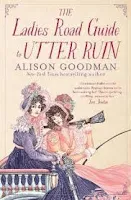
Review: The Ladies Road Guide to Utter Ruin by Alison Goodman


The Ladies Road Guide to Utter Ruin by Alison Goodman


This is the second in Goodman’s “Ill-Mannered Ladies” series, which follows my new favourite twin sisters Lady Augusta (Gus) and Lady Julia Colebrook. I enjoyed the first in the series so much that I pre-ordered this and read it as soon as it was released. The Colebrook twins are fabulous - unmarried, unapologetic, unrelentingly curious and courageous as anyone could hope to be. In this book, the sisters find themselves helping fugitive Lord Evan and his sister, by saving the sister from the clutches of their eldest brother and trying to clear Lord Evan's name of the murder he has been convicted of.  


I actually think I preferred this second instalment to the first. It is so entertaining - Sherlock Holmes meets righteous feminist indignation. I think what improved this story for me was that rather than focusing on several mysteries, it followed the one throughout. What really makes this such an entertaining book is the relationship between Gus and Julia. They are so different, and yet so loyal to one another. They can read each other's minds and yet at times are so exasperating to one another.  I loved them in the first book (The Benevolent Society of Ill-Mannered Ladies), and I loved them even more here. They feel like the kind of women you might want to write old-fashioned letters to and would find highly intelligent and entertaining correspondents. 


And the romance, sigh. Gus continues her slow-burning romance with Lord Evan, who remains on the run from the law. Julia starts her own romance with a bow-street runner, a more subtle romance than that of Gud and Lord Evan, but obviously still deeply felt. What is great about this series is that despite Gus and Julia having romantic interests in the story, they remain committed to what I would call social injustice and the restrictions that society places upon them due to their age and gender.  


I highly recommend this series, written by an Australian author. Start with the The Benevolent Society of Ill-Mannered Ladies and know that it will get even better in The Ladies Road Guide to Utter Ruin. 


Review(s): Underground Railroad by Colson Whitehead and James by Percival Everett


Although I know it is unusual to review two books at once, I read these one after the other and found many common themes between them. I reflected on the narratives and the themes together and so it felt more natural for me to review them together. 

Underground Railroad is a Pulitzer Prize–winning novel which reimagines the historical Underground Railroad as a literal underground train system used by enslaved people to escape bondage in the American South. It follows the plight of Cora, a young woman fleeing a Georgia plantation, as she travels from state to state, encountering different, often horrifying manifestations of racism and oppression. It's essentially a blend of historical fiction and speculative fiction - or historical fiction with speculative elements. It certainly feels far more historical than anything in the way that it describes the brutality of the lives of enslavement that so many people were subjected to.  


James is a reimagining of The Adventures of Huckleberry Finn, but this time told from the perspective of Jim, the enslaved man who accompanies Huckleberry on his journey. Similarly to Underground Railroad, James is a piece of historical fiction with speculative element. Everett imagines that enslaved people only speak in the stereotyped dialect when white people are listening. As the story unfolds, it is revealed that this use of language by the enslaved is a strategic performance rather than a reflection of their reality. What I took from this is that Everett was trying to reclaim the voice of the enslaved by challenging the historical depiction of enslaved people as ignorant or unintelligent. It acknowledges that white cultures (whether in the past or present) often see and hear what they expect to see and hear.


These novels have so much in common. From a literary perspective, they are both about centreing the perspective and experiences of black characters who were enslaved and voiceless, and showing them as complex and autonomous people. Of course, they both touch on violence and systemic oppression by white culture, something that continues into the present day in its evolving forms. They both deal with how their characters fight their dehumanisation through whatever acts of resistance that are available to them. 


In the end though, I think what was most emotional for me was how each book explores freedom as an illusion for those escaping slavery. Both Jim and Cora go on their own unique journeys to freedom, but in the end, this doesn't result in their liberation. They are still encumbered by loss, racism and violence even as they reach 'freedom'. It's sad and emotional, but what I believe is an authentic representation of 'freedom' would really have meant.


Babel: Or the Necessity Of Violence by Rebecca F Kuang


I loved Babel: Or the Necessity Of Violence but it dealt with so many important issues in such a meaningful way that I have felt a little unsure about whether I can really capture it in a review.


I came to it because I have been trying to read the Longlisted and Shortlisted books for the Booker Prize 2025, and Babel: Or the Necessity Of Violence was high on my priority list after reading Yellowface by Rebecca F Kuang last year and appreciating the way that she explored cultural appropriation. 


In Babel historical fiction meets fantasy fiction - set in an alternate 19th-century England, where the power of empire is fuelled by the magic of translation. This is literal - with silver bars that harness the lost meaning between words in different languages to produce extraordinary effects. Placed in a carriage they can increase the speed and comfort of the drive. Placed on a ship they can improve the quality of the journey and increase speed. The magic of the silver bars is created through the work of Babel’s translators, who inscribe them with paired words from different languages, capturing the untranslatable gaps in meaning to unleash powerful effects that only those fluent in both languages can activate.


The story centres on Robin Swift, a Chinese orphan brought to England, who is trained at Oxford’s Royal Institute of Translation (Babel), where linguistic magic enhances colonial domination. Robin and his group of close friends, are treated as second class citizens even when their skills are required by the empire, slowly become aware to the moral contradictions of the system that saved then in many cases from poverty, but at the same time has enslaved them through dependence. They are each faced with a decision about whether they continue to serve the British Empire or fight it.  


Although one of the books main themes was undoubtedly the power of language and how it can be used as a tool of colonialism and imperial control, for me what forcefully struck me was the question contained in the title - the necessity of violence. Can meaningful change ever come without violence?  


Is violence necessary to create social change?


For me, this is the question that stuck with me the most throughout the book, and something that the characters are increasingly forced to reckon with. Robin and his friends all try different ways to push back against the system the Empire has created. They try working within it and consider how they can contribute to its reform before eventually turning to more drastic action. The book made me reflect on what I suppose is an age old question in the modern world - we can argue our position against injustice, call for change, try the path of logic and advocacy, but if the people who have the power to create won't listen because their power is derived from the system itself - then is there any choice but violence? 

Kuang didn't glorify violence in Babel, but she also didn’t shy away from the reality that history has rarely changed without it. It made me reflect on the women's suffrage movement, where women turned to arson, bombings, and hunger strikes after years of peaceful protest were ignored, and they were succeeded. During the industrial revolution violent strikes, riots, and worker uprisings were crucial in achieving improved working conditions through legal reform. I think history shows that in most cases change does require violence and relies on people willing to sacrifice themselves to bring it about. 


Friendships and family


Another theme throughout the novel that I continue to reflect on is that of friendship and how the characters rely on it in the face of oppression to give them hope and purpose. Robin and each of his friends are from different parts of the world and as they enter the world of Oxford they increasingly feel the contradictions in their day to day to day lives. At Oxford, they are treated as second-class citizens. The women are unable to live on campus or attend events without pretending to be men, and the men are attacked and ridiculed for the colour of their skin. 


This is where the contradiction lies. On the one hand, they are clear that their social standing is not that of other students at Oxford while on the other hand the Empire requires their skills to maintain and extend its power. On the other hand, they are crucial to the empire’s power. This forces them to grapple with their place in a society that values their skills but not their humanity. 


We are also able to see these same contradictions played out in Robin's personal life. As a child he was removed from his family and taken to England by a man who valued his skill and ability with languages. It was clear that he viewed Robin's 'success' as a personal triumph because he believes that he has raised Robin to overcome the inferior traits he associates with Chinese people. He sees Robin as an exception arising from the positive influence of the British Empire and is blind to any systemic oppression. He sees a successful experiment that has brought glory to the Empire, not his ward's humanity. 


But it was so inspiring the way that sharing many of these experiences brought the friends together and gave them the strength to cope with the challenges that were thrown their way. However, while Robin and two of his friends were immigrants to England, their third friend, a white British student, doesn’t fully understand the weight of their struggle, and this difference strains their friendship. 


This made me reflect on my own privileged position in Australian society. As someone with privilege, I recognise that disadvantaged cohorts and individuals often have lived experiences and insights about issues that I cannot fully grasp. That means that I need to try to listen and accept their truth without filtering them through the lens of my own privilege. This is something that we all need to do better with and is certainly the case for the friendships in Babel. 


A book that makes you reflect in these ways is well worth the read, and this comes highly recommended from me. 

Review: The Barforth Trilogy by Brenda Jagger (some of my favourite books of all time)

The Clouded Hills by Brenda Jagger has the honour of being one of the best books I have ever read. I fell in love with this book as a teenager and I have never quite recovered.

The Clouded Hills is the first book of the Barforth Trilogy by Brenda Jagger, all of which are based around strong female characters who are struggling to find a sense of self and independence in the 20th century.

The Clouded Hills is set in early 19th century England at the time of the industrial revolution. The protagonist, Verity Barforth, is the daughter of the most prominent cotton manufacturer in Cullingford, a manufacturing town in Yorkshire. Her life is turned upside down when she suddenly becomes heiress to a fortune when her father and elder brother are killed by the workers of their factories when they attempt to introduce labour saving machinery that will see the loss of many jobs for the workers and subsequent starvation. All control is taken out of Verity's hands, and she soon finds herself married to her elder and incredibly ambitious cousin Joel Barforth.

The Clouded Hills follows Verity Barforth as she attempts to carve out an identity of her own in the face of opposition from the society in which she was born. It is her journey of self discovery and an attempt to find true love in world that seems determined to make sure that it can't be found.

What can I say? You may never read a better book. Not because it is a wonderful piece of literary fiction. Not even because you will learn more about the industrial revolution in the early 19th century than you ever knew before.

It is because if you are anything like me, you will fall in love with the characters. Their challenges will become your challenges, their disappointments will become your disappointments and their triumphs will become your triumphs. You will feel as though you there with them for every step of their journey. You will live the life of the people in the slums, as well as the lives of those in the manufacturing classes. You will become part of the early 19th century itself; understand its social, political and economic complexities and how these really affected the lives of women at the time.

The following two books in the Barforth Trilogy, Flint and Roses and The Sleeping Sword are equally as enjoyable as The Clouded Hills. 

Like The Clouded Hills, both books centre on a strong female character who is hindered by her sex, each in the generation following the one before.

In Flint and Roses, it is Faith Aycliffe, the daughter of Verity Barforth's (the protagonist in The Clouded Hills) counsin Eleanor. Little has changed for women in the interceding years between the two books, and Faith finds her abilities and desires must come second to the economic and social choices she must make about her future.


In The Sleeping Sword, it is Grace Agbrigg, Faith Aycliffe's niece who is the central protagonist. Like Faith and Verity before her, Grace finds that her own desires must come second to other considerations in life, which are more about economics and social positioning than anything else. There is, however, a discernible change in the role of women by the late 19th century. Grace is able to make decisions somewhat more independently than the women who have come before. In fact, when she finds herself in a miserable and emotionally abusive relationship, is able to make the ultimate sacrifice and seek divorce from her husband. Although the consequences of this decision haunt her for the rest of her life because the change in social status it brings upon her, it is at least a sign that times are beginning to change for women.


It isn't, however, just the changes for the role of women throughout the 19th century that this trilogy focuses on. Through the three books, we also see the changes bought by the industrial revolution and developments in technology, public amenities and greater human rights. 

What I learnt most from all three of the books in the Barforth Trilogy is that women were really fighting for independence of thought and action. Choice. An ability to make decisions for themselves and about themselves. That decision might in the end be a decision to conform to societal standards and expectations, or it might not. But what counts is autonomy of person and reason.


8 / 8
Each of these books, but most especially The Clouded Hills, are some of the best books I have ever read. Everyone should read the - they totally amazing. I am in love. Although the first book definitely had the greatest impact on me, I am giving them each 8 / 8 stars.


Have you ever felt as though you have become part of the book while you were reading it? Which book did that for you? If you have read this book, how did you feel about it?


Originally posted 19 October 2011 Page Turners


The Land of Painted Caves by Jean M Auel


I hate to say this. I really really do. So perhaps first I will say that if you are an Earth's Children fan who hasn't read The Land of Painted Caves yet, do not read on. I should also add from the outset (because I know that some people like a whole lot of analysis in their reviews, supported by excerpts from the text blah blah blah) but this is going to be much more like a rant than a review. So here we go.

This was bad. I know that the last few in the series were pretty bad too, but I really thought that Auel would have pulled something really good out the hat for the final book in the series, especially after having had decades to write it.

Instead, the story drags. On. And. On. Seriously, too many long journeys. Too many caves. Too long becoming a Zelandonii. Too much repetition. I mean, we get it. There is a family in the cave that does not look after their children. Zelandonii (Zolena) is fat and has trouble moving around. Jondalar is a jealous bloke with a bad temper. Ayla can't sing. The special Clan root she chews for the important ceremony is very dangerous. Ayla believes that babies come from men and women having sex and this is a revolutionary thought that will change history.

I had heard most of this in previous books, and those things that I hadn't, I heard in this book way too many times.

My bigger problem was that I felt as though the Ayla in this book was almost a different Ayla to the one in the previous books. I'm sorry, but there is no way on earth that Ayla would ever agree to kill someone, no matter what the circumstances. And Ayla as a mother in this book just didn't feel right. It felt right with Durc, but not with Jondayla. Maybe it was just the stupid name, but there was no connection between them. It felt like Jondayla was a plot device rather than a real person. I want my characters to feel like real people.

Honestly, towards the end I was skimming the book, not reading it.

I'm glad that I read the book, and somehow I think that I could still recommend the series to people, because the first book connects with you so much (and the second and third books in my view) that it is worth reading the rest of the series just to experience how wonderful the story of Ayla and Jondalar can be.

I just wish that Auel had written a shorter and more concise series (and final book) that did her otherwise wonderful characters justice.

(I know this becoming a habit now, but again, this book won't get a star rating. If you read this series, you will eventually read this book, so there's little point trying to capture my feelings in a rating system.)

What did you think of this final book in the series? Were you as disappointed as me? What do you think happened? How is possible to start off a series so well and finish so badly?

Originally posted 26 June 2011 Page Turners

The Sinkings by Amanda Curtain

The Sinkings is Australian author Amanda Curtin's debut novel. If you are looking for a distinctive book which encompasses historical and contemporary Australian life and deals with challenging issues, then this is a book for you.

There are two central characters in Curtin's debut novel, The Sinkings. The first is Little Jock, a convict found brutally murdered in 1882. Then there is Willa, an out of work editor who is attempting to come to terms with the disintegration of her own family. She becomes obsessed with the story of Little Jock when she learns that his deceased body was at first identified by a medical expert as that of a woman. Little Jock is intersexed (a hermaphrodite), and by exploring his life, Willa attempts to come to terms with the guilt she feels about her own intersexed child.

The chapters in The Sinkings alternate between the story of Little Jock and Willa so that the reader has an insight into both their lives.

Through the character of Willa, Curtin explores the reality of dealing with the birth and raising an intersex child. Willa has had to make some difficult decisions and is being suffocated by guilt and self-doubt as her family falls apart under the pressure of dealing with such a difficult situation. Researching Little Jock's life becomes a took through which Willa can begin to come to terms with the decisions she has had to make on behalf of her daughter, decisions that her daughter has ultimately come to resent.

It was the story of Little Jock, however, that really grabbed my attention and was the highlight of the book. I was fascinated with his journey, which began as a little girl in Ireland to his being adopted as young boy by an English family. Living in poverty leads him to life of crime which ultimately sees him transported to Australia as a convict. The story then follows his struggles as he tries to hide his true identity and make a life for himself.

Curtin does so many things really well in The Sinkings. Her depiction of convict life was honest, and she created a very interesting character in Little Jock. Her exploration of the realities for people born intersexed and their families was fascinating, and it was clear that life for those that are intersexed is no less difficult now as it was in the past, albeit perhaps in different ways.

The Sinkings was a good mix of history and contemporary life, although I do have to admit that I would have enjoyed the book just as much, if not more, if it had been solely about the life and death of Little Jock.

This was a wonderful debut Australian novel and one that I would recommend if you had the time.


5.5 / 8
Enjoyable and well written. Worth reading if you have the opportunity.

Do you enjoy reading debut novels? What is it that you like or don't like about them?


Originally posted 6 April 2011 Page Turners

Jonathan Strange and Mr Norrell by Susanna Clarke


Susanna Clarke had enormous aspirations when she wrote Jonathan Strange and Mr Norrell; a book with a strong plot and lots of potential.

I was really excited by this book initially, thinking that the story was going to be magically mesmerising. It is set in an alternative version of 19th century England where practical magic, that was once commonplace, has now died out. Enter Mr Norrell, a man who claims to be the only practical magician in existence and who sets out to return practical magic to the world. It soon becomes clear, however, that there is a second and more personable practical magician in England, Mr Jonathan Strange.

Mr Norrell takes Mr Strange on as his apprentice, and it chronicles their different magical approaches and activities that culminate in their falling out – which as an enormous influence on the practice of magic in England.

The events all stem from one of Mr Norrell's most terrible magical acts – the raising of a young woman from the dead – and the consequences it has for the magical and human realms.

Jonathan Strange and Mr Norrell falls into many different genres (historical, fantasy, classic) and so is a book that no doubt has a wide appeal.

It's biggest appeal to me was its authenticity. Clarke used many different techniques to make it feel as if it really were a 19th century book. Clarke also wrote Jonathan Strange and Mr Norell in the language of the 19th century, very similar to the language of Austen or Dickens or Louisa May Alcott. She used real historical events but wove magical elements throughout and around them to give them their own distinct character.

There are wonderfully drawn charcoal drawings throughout the book that are very dark and blurry and are a perfect representation of the atmosphere that Clarke creates in the story.

The book has a significant volume of footnotes, a lot of which take up more room on a n individual page than the story itself. For the most part, I found these footnotes fascinating. Clarke has created an entire history of magic which she shares through the footnotes. I was astounded by this creative feat, initially at least, although I have to admit that I ceased to read them close to a half of the way through the novel.

Finally, Clarke successfully gave the book a very English feel. Jonathan Strange and Mr Norrell may have been based in an alternative world/universe but the language she used, the atmosphere she built and the characters that she created were so very English that it added a strong impression of realism to the story.

Did I love it?

I wanted to love it, and I almost did, except that it was about 300 – 400 pages too long. This book looks and feels like a brick and is almost impossible to carry around with you for extended periods of time. By the time that I got halfway through the story I was losing interest, and by the time that I was ¾'s of the way through it I was skim reading.

I understand that Clarke was attempting to write an epic historical novel set in an alternative history or world (a la LOTR perhaps?) but the result was a lot of tedious and unnecessary detail about the activities of the magicians and the other characters whose lives intersect with the magical realm. We read about a lot of different events and occurrences, but so few of them seemed to add anything to the plot.

Overall, I felt like Jonathan Strange and Mr Norrell had a lot of potential to be an enjoyable and unique book, but I feel like Susanna Clarke got a bit carried away and in the end the result was a long and tedious novel.


5.5 / 8
Good and worth reading if you have the opportunity, but not one to get excited over.

What did you think of Jonathan Strange and Mr Norrell - did it keep you interested for its entire length or did you lose interest like me?


Originally posted 2 March 2011 Page Turners

Death Before Wicket by Kerry Greenwood


In Death Before Wicket, the sophisticated and debonair The Honourable Miss Phryne Fisher visits Sydney, ostensibly for a holiday, but also because she has been summoned there by two young university men to solve the mystery of some missing university documents, which were stolen from a safe at Sydney University. A friend of these young men has been blamed for the theft and they hope that Phryne can clear his name.

Phryne takes on this seemingly simple problem but soon finds herself embroiled in a mystery involving curses and black magic. The deeper she delves in the mystery the more danger she places herself in.

Her investigations into this matter are of course complicated by the fact that upon returning to Sydney, her faithful companion Dot discovers that her sister has disappeared, leaving her husband and children behind. Phryne attempts to discover the whereabouts of the missing woman, but her investigations lead her into the seedier side of Sydney life, and she has to try to discover the truth without hurting Dot's feelings or Catholic sensibilities.

I did enjoy this book, although strangely not quite as much as I have her others. I think that is because the change of setting from Melbourne to Sydney may have distracted me a little bit. Having said that, Greenwood's depiction of 1920's Sydney is spot on. She captures the people of Sydney, the atmosphere and of course the heat (something I am very familiar with, especially this week with temperatures reaching almost 40C (104F) every day) so wonderfully that I felt as though I was right there in the 'heat' of the moment with Phryne.

The plot in Death Before Wicket was the most complicated plot I have read in a Phryne Fisher mystery, and whilst that sometimes made it a bit harder to follow than the other books in the series, it still added to the mystery.

Phryne herself was as sophisticated in Sydney as she is in Melbourne. As usual, my mouth watered at the descriptions of all the food and the drink that they all consume, and I was particularly taken aback by the raunchiest sex I think Phryne has ever had (that I have read about anyway!).

All in all, a fabulous read and I can't wait to get my hands on another one in this series.


6.5 / 8
Really enjoyable and well written, couldn't put it down. Recommend that you buy it.

 
Do you enjoy reading books that are based in your own city? What do you enjoy about them?


Originally posted 16 February 2011 Page Turners

Fugitive Pieces by Ann Michaels


Fugitive Pieces
by Ann Michaels is a stunning piece of historical fiction that I both admired and was frustrated by.


It tells the story of people whose lives have been affected by the holocaust in some way. In fact, the book is told in two pieces; the first is narrated by a survivor of the holocaust, and the second by someone whose parents were affected by this historical disaster.

The first and main narrator is Jakob, a Jewish boy from Poland who finds himself hiding in the woods after his family and killed and taken to camps. He is rescued by a liberal minded Greek archaeologist Athos who hides Jakob throughout the war and raises his as his own son. The book follows Jakob as he reaches adulthood and he and Athos move to Canada and start a new life there.

The second narrator is a young man named Ben, who was born in Canada to parents who were themselves fugitives from the war torn Europe. Ben greatly admires Jakob's poetry and having met Jakob once, feels as though Jakob has had a significant impact upon his life.

There are definitely aspects of this book that I greatly admire; the most significant being the writing. The writing is vivid and flowing, it almost feels as though you are reading poetry rather than a novel. This style is perfectly suited to the task of exploring the effect of war on people who find themselves fugitives in some way or another from the disaster that it creates.

Having said that, this novel failed to win me over.

At times a little too much was left to the imagination. I felt as though there was very little story actually taking place. This in a way makes sense because you are primarily watching Jakob's life unfold - but the reality is just watching someone's life unfold in pretty uninteresting. That's why in fiction there is usually a plot to keep the story moving along. The book needed more story, it was just really slow at times.

Whilst I appreciated the idea behind having the two narrators, in the end I found it unsatisfactory and unnecessary. Jakob narrates almost the entirety of the book, and it is not until right at the end that the second narrator takes over. By that time, I had spent so much time reading about Jakob that I wasn't interested in what someone else had to say about him, especially someone seemingly so totally unconnected with him.

Fugitive Pieces won the Guardian Fiction Award in 1997 as well as the Orange Prize in 1997. It is undoubtedly a good book, with beautiful writing and important messages.

However, whilst I greatly admire the idea behind the story and Michaels's poetic writing, the story itself lacked enough content to thoroughly satisfy me.


5 / 8:
Good and worth reading if you have the opportunity, but there is no need to prioritise it.


I would be greatly interested to know if anyone else has read this book and felt as unsatisfied as I did, despite being able to acknowledge how wonderfully it is written?


Originally posted 19 January 2011 Page Turners

The Earth's Children series by Jean M Auel


The Earth's Children series by Jean M Auel is an ongoing historical fiction series about Cro-Magnon man. This series is many things; epic, romantic, dramatic... and frustrating. I recommend it to everyone.


This series of books is very special to me. My mother suggested I read it when I was in high school, and as soon as I read the first one (The Clan of the Cave Bear) I was hooked.

It is an immense saga set in prehistoric times, as Cro-Magnons' are coming into their own and Neanderthals are dying out. Ayla is a Cro-Magnon, or an Other, but is raised by the neanderthals, or The Clan, after she is found by them as a young girl. The series documents her life, her trials and tribulations. She is made an outcast by the people she was raised by and goes on a journey to discover her true self and her people. Along the way she meets many wonderful characters, including Jondalar - her soul mate.

Ayla is also fated for some bigger role in the development of the humankind. She has some inkling that this is the case, but dreams of living a normal life with Jondalar and hopefully a family.

As yet, we don't know what will happen to Ayla, and that is because the series is incomplete.

There are five books in this series with the sixth and final book scheduled to be released next year. Auel began the series in the late 1970's, so it is about time that we got to read the end. The novels are:
  • The Clan of the Cave Bear,
  • The Valley of Horses,
  • The Mammoth Hunters,
  • The Plains of Passage, and
  • The Shelters of Stone.
For as much as I love this series of books, I do have a lot of quibbles with it.

The Clan of the Cave Bear was a really excellent book. It had the perfect blend of story and historical information. Unfortunately, as the books progressed, Auel seemed to become more concerned with displaying her knowledge of the era in which the story was based. You are increasingly given long winded descriptions of landscape and social and cultural practices. Not that this isn't interesting, but Auel takes it so far that it makes me feel as if she is showing off her knowledge rather than telling the story.

Another complaint is in relation to the sex scenes between Ayla and Jondalar. Don't get me wrong, I like a good sex scene.... but these are not good. They read as if they are out of Mills and Boon and yet these books should be so much better than Mills and Boon. The sex is just so cheesy and cliche it is difficult to read.

Finally - the fact that this series has been going for so long! I love this series of books (despite my complaints) and it really annoys me that I have had to wait since 2002 for the next instalment of the books.

How can it possibly take someone 30 years to complete a series. It doesn't seem fair to the fans. The cynical side of me thinks that it is because Auel is spending so much time researching it so that she can bore us with limitless detail instead of just getting on with the story of Ayla and Jondalar, which is what we are all reading the series for.

Please don't let my complaints get in the way of you reading this story - I complain because I love the books so much! I re-read this series all the time, and have re-read the first three this year for the umpteenth time. The Mammoth Hunters (the third instalment) is my favourite of all. Truth be told, I often consider naming my first-born daughter Ayla after the character in these books.

If you are looking for something interesting and factual whilst being a little bit trashy at the same time - with a good dose of romance thrown in, this is the series for you. No wait.... this is a series for everyone!

Summary

What kind of read is this?
Although each book looks very thick, they are very easy to read. It is historical fiction meets romance, and it is fabulous.

Do I recommend this book?
I recommend all of them, the first and the third in the series are my favourites.

Do I recommend that you buy this book?
Without hesitation. They are just as good each time you read them.

Star Rating

8 / 8


Everyone should read them - they are totally amazing. I am in love.

Has anyone else read this series? What do you think of them? Did you know that the sixth was coming out next year and that it will be the last? I didn't, but I am very excited about it. I only hope that it ends well and explains everything.


Originally posted 22 November 2010 Page Turners

The Book Thief by Markus Zusak


This absolutely unique piece of historical fiction moved me more than any book has done for a very long time, perhaps even since I read The Time Travellers Wife. This is a book for book lovers. The Book Thief is written by an Australian author, and it is his debut adult novel, after a career of writing children's fiction.

The protagonist of the novel is Liesel Meminger, a young girl growing up in Nazi Germany. It begins with the death of her brother, and her mother then leaving her in the care of the Huberman's, who become her new family. There is Mama, a fierce disciplinarian, and Papa a caring and warm man who dedicates hours to teaching Liesel to read. With the help of her Papa, she begins to read The Gravediggers Handbook, a book she finds following the burial of her brother.

What is particularly unique about this story of Nazi Germany, is that it is narrated by Death. Death doesn't introduce himself in those terms, but it becomes clear who is telling us the story of The Book Thief.

The style is expressive in a lyrical way and is still very modern. Not only do we see the story unfold from Liesel's perspective, but we also have asides from Death, sometimes written as if they were on a gravestone. In effect, it is Death re-telling the story of Liesel, The Book Thief, and so we are provided many glimpses of the future of the story. This in no way deters the reader from reading on, it is one of those books where it is the journey to the conclusion that is the real joy of the book.  Death himself acknowledges:
"Of course, I'm being rude. I'm spoiling the ending, not only of the entire book, but of this particular piece of it. I have given you two events in advance, because I don't have much interest in building mystery. Mystery bores me. It chores me. I know what happens and so do you. It's the machination that wheel us there that aggravate, perplex, interest and astound me".
Zusak skilfully creates Liesel's experience through Death's storytelling with the use of imagery. This is because Death gives a very sensory account of the world, describing events, places and people with phrases such as "the smell of friendship", "scent of Hitler's gaze" and "For me, the sky was the colour of Jews". We are left with strong and clear images burned into our minds as we watch Liesel's story unfold.

As we give in to the sensory reality of Death's narrative, we see Liesel experience the normal angst of childhood; struggling through school, going on adventures with her best friend Rudy Steiner and helping her Mama raise funds by collecting laundry from neighbours. It is in this last role that she is truly able to give in to her love of books, and she eventually begins stealing them from the mayor's house, after she makes friends with the mayor's wife. It is this act, and the further acts of book thievery that lead Death to give her the name of 'The Book Thief''.

There is a darker side to her life though. She lives in a town a short distance from Dachau, and witnesses Jews being marched through her city. We witness her and Rudy's involvement in the Hitler Youth Movement, and cringe at the insidious way in which Nazism infects their daily lives. Nazism has a more significant impact upon her life when her family begins to shelter a Jew, Max Vandenberg.

This book is undoubtedly about the experience of human misery in WWII, and Zusak does a brilliant job of describing the realities and intricacies of the lives of German people during Hitler's reign. We see acts of cruelty and acts of kindness and love.

And yet, The Book Thief is also about the power of language. It is books that allow Liesel to recover after her brother's death and her mother's abandonment. Books and language bring her closer to her Papa and become integral to her relationship with Max Vandenberg and to a lesser degree the mayor's wife. It is though books and storytelling that she brings comfort to those that she shares the bomb shelters with, and it is books that play an important role in those transgressions against the Nazi state that she and others are willing to commit. Significantly, it is because of books that Death is able to tell us Liesel's story at all.

This is a book that had tears rolling down my face on three different occasions. It is a powerful but sad story about human suffering and the importance of language in the modern world. If you are a book lover, and a lover of language, then I not only recommend this book to you, but I also ask you to read it.

Summary

What kind of read is this?
It is an easy read, but it is emotionally challenging. It is very different to anything I have read before, largely in terms of the style in which it is written.

Do I recommend this book?
Yes, I couldn't recommend another book more strongly. You absolutely must read this.

Do I recommend that you buy this book?
Again, yes, absolutely, without hesitation. My book collection is all the stronger for having this book.

Star Rating

8 / 8

One of the best books I have ever read. Everyone should read it - it is totally amazing. I am in love.


Book Details: Paperback, 584 pages, published by Pan MacMillan Australia, published in 2008, English


Originally posted 30 May 2010 Page Turners