Showing posts with label Literary. Show all posts

Literary Wives Book Club (June 2026): Interpreter of Maladies by Jhumpa Lahiri

Literary Wives is an on-line book group that examines the meaning and role of wife in different books. Every other month, we post and discuss a book with this question in mind: What does this book say about wives or about the experience of being a wife? 

Don’t forget to check out the other members of Literary Wives to see what they have to say about the book!

Other participants:


Interpreter of Maladies by Jhumpa Lahiri


I have to begin this review by admitting that I am not usually a short story reader. I have always gravitated towards novels, I think I just tend to prefer to spend a bit more time inside one story. It gives me more of an escape from the day-to-day and a place to still my otherwise very busy mind.  That's the good thing about this book club, though - it consistently pushes me outside my usual reading habits. 


Before I get into what Interpreter of Maladies says about wives I thought I would start I would start with some reflections on the collection as a whole. The collection centres largely on Bengali and Indian characters who are often living between cultures, and it explores the relationships between characters who usually share a marriage or a family, but seem unable to truly communicate with one another. Even though some of the stories are quite short Lahiri is still able to portray marriages, family histories, disappointments, migrations, betrayals, and entire emotional lives so acutely and pignantly it's not wonder that the collection won the Pulitzer Prize. 


The story that has stayed with me most is probably A Temporary Matter. Shoba and Shukumar are a married couple whose relationship has been devastated by the stillbirth of their baby. During a series of planned evening blackouts, they begin telling one another secrets in the dark. At first it feels as though the confessions might bring them closer together, but it becomes clear that the grief they have felt has irreparably kept them apart from each other and they are reflecting on what has been at it's end. It is a heartbreaking story, and one that felt particularly relevant to the Literary Wives theme because it asks whether love alone is enough when two people are grieving differently.


Another story that seems directly connected to the idea of wives is Interpreter of Maladies itself. Mrs Das initially appears to be a modern and confident wife travelling through India with her husband and children. Yet as the story unfolds we learn how dissatisfied Mrs Das is with her life. She confesses of her infedility to their tour driver, not so much for advice but jstu to connect with someone. Eventhough she is surrounded by her family on a wonderful holiday, she is desperately lonely. 


Loneliness is something that recurs throughout the collection. In The Blessed House, newlyweds clash over a series of Christian objects discovered in their new home. It's funny but it's also two people who have entered marriage without really knowing or understanding each other. Sanjeev spends much of the story frustrated by his wife and also fascinated by her. Rather than them having come to know each other and embarking on their life with each other in a partnership, they are still getting to know each other, a risky way to start a marriage perhaps. 


Overall, Lahiri rarely presents marriage as a place of certainty or fulfilment.  Her married characters often seem to be negotiating misunderstandings, disappointments, cultural expectations, private regrets. Essentially I think Intepreter of Maladies is trying to portray to the difficulty of truly knowing another person, a common theme in the books we have read for the Literary Wives Book Club. 


So what does Interpreter of Maladies say about wives or about the experience of being a wife?


For me, the strongest theme was invisibility. Often the wives appear to be carrying emotional burdens that their husbands either cannot see or do not fully understand. Some are lonely. Some are homesick. Some are disappointed by the reality of their lives. Some are living with secrets. Some are trapped in their grief. Yet very few feel able to express those feelings openly within their marriages. The couples rarely communicate honestly with each other. It's fascinating to see so many people who have committed to sharing their lives with one another, many of whom would have done so from a place of deep love, and yet they are so far apart from each other. 


For someone who does not usually read short story collections, I found this surprisingly rewarding. Not every story resonated equally with me, but by the end, I understood why Lahiri's work is so highly regarded. She had an extraordinary ability to capture entire relationships in just a handful of pages per story. 

Literary Wives (March 2026): Mrs Bridge by Evan S. Connell

Literary Wives is an on-line book group that examines the meaning and role of wife in different books. Every other month, we post and discuss a book with this question in mind: What does this book say about wives or about the experience of being a wife? 

Don’t forget to check out the other members of Literary Wives to see what they have to say about the book!

Other participants:


Mrs Bridge by Evan S. Connell

Mrs Bridge is set in middle-class Kansas City in the years between the late 1920s and the post-war period, and quietly follows the life of India Bridge, a respectable, well-off wife and mother living exactly the life she is supposed to want. 

The story unfolds through a series of small, precise vignettes which show moments in India Bridge’s life that, when taken together, give you an almost perfect sense of her character and her world. We meet her in her late teens and then follow her through her children’s younger years, their adolescence, and later, as they leave home and begin lives of their own. 

She lives a lonely life, with a husband who works almost constantly, and within social expectations that quietly but firmly shape everything she does. She couldn’t necessarily articulate that sense of restraint, but she clearly feels disconnected from herself and from her own life. Early on, she reflects that as a young woman she had felt marriage and family life might not be for her but she wasn’t taken seriously. That life simply wasn’t presented as a real option. Women (and men, to a lesser extent) were given one narrow path: marriage, children and domesticity. Mrs Bridge falls into what is expected of her, and from there she keeps rolling forward, never quite feeling like she is steering. She is always the passenger, never the driver. This idea is beautifully and painfully captured in the final scene of the book. 

I felt a little disconnected from her as a character but I think Connell does this deliberately. We feel removed from India because she is removed from herself. There are moments when she comes close to recognising what is missing and trying to do something about it, like when she leaves a potentially controversial book lying around, hoping it might start a conversation with her husband. But she always retreats. It is as though she is too afraid to follow these flickers of awareness through, too frightened to really confront the emptiness she senses in her life. 

There are a couple of possible reasons for this. She may be afraid of what she will discover if she looks too closely. Or she may simply never have been given the emotional language or life skills to identify and act on her own needs. This is a time when women were barely acknowledged as having needs at all, let alone encouraged to take them seriously. 

One of the most unsettling moments in the novel is her strangely muted response to a friend being killed by their own child. It feels as though she is frightened of strong feeling itself. Possibly she knows that if she faces the horror and pain she not be able to contain herself.  

There is also an undercurrent of casual, unquestioned racism running through the novel that feels entirely of its time. It appears in off-hand remarks, in social assumptions, and in the way people who sit outside Mrs Bridge’s world of comfort and respectability barely register as fully realised lives.  The prejudice is not loud or dramatic; it is simply absorbed into the background of everyday life. In a way, this mirrors Mrs Bridge’s own emotional blindness. Just as she rarely interrogates the limits placed on her as a woman, she also never questions the social order that places her so securely in it and others so far outside it. 

So much of what Mrs Bridge does, she does because she thinks she should. Hosting cocktail parties. Hiring a maid. Keeping special hand towels for special occasions that she hopes no one will use and no one ever does. These rituals of correctness become substitutes for meaning. They are how she measures whether she is succeeding at her life. 

Her relationships with her children are shaped in exactly the same way. She is deeply invested in what they should be doing, what they should care about, and how they should behave. She is so focused on the “shoulds” that she misses the quiet, ordinary pleasure of discovering who her children actually are and of building relationships with them that are genuinely mutual. 

What does Mrs Bridge say about being a wife?

What Mrs Bridge ultimately says about wives, and about women like Mrs Bridge, is so beautifully restrained. It shows how a life can be carefully constructed, socially admired, and still feel profoundly uninhabited or empty. Marriage does not ruin Mrs Bridge and Mr Bridge isn't cruel to her or her children. Mrs Bridge shows something something more insidious: a world that trains women to be accommodating, pleasant and grateful, while preventing them from coming to know themselves and be themselves.

This is a wonderful novel. It is short yet perfectly crafted. I really can’t fault it and I would recommend it to everyone.


Review: Piranesi by Susanna Clarke


I picked up Piranesi after hearing it recommended on the ABC Radio National Top 100 Books of the 21st Century countdown, and it turned out to be one of those books that feels quietly special while you are reading it, and then keeps revisiting you afterwards.


The story is told through the journals of Piranesi, who lives in an enormous House made up of endless halls filled with statues. The lower levels flood with the tides, the upper levels are dry and calm, and the House seems to provide everything he needs (albeit not much). There is only one other person in his world, someone he calls the Other, who visits occasionally and is searching for some kind of hidden knowledge. As Piranesi records his days, small details begin to feel off, and gradually you realise that there is much more going on than he understands.


That is about as much as I want to say about the plot, because this really is a book you should discover slowly.


What I loved most about Piranesi was the feeling of it. The world is mysterious and magical, but it also feels incredibly real. Clarke builds it so carefully that you accept it almost without question, even when you do not fully understand how it works. I could see it clearly in my head, and I did not want to leave it.


In a strange way, it reminded me of the stories I used to make up as a child. Those imagined worlds that felt complete and absorbing and totally logical while you were inside them. I think that has a lot to do with Piranesi himself. He moves through his world with such openness and appreciation. He delights in it. He notices things. He is grateful for what he has. That straightforward way of seeing made the book feel both gentle and profound.


The writing is beautiful but very restrained. It never feels like it is trying too hard. The mystery unfolds slowly, and even when the book ends, it feels like there is still more there to think about. I finished it with the sense that I had not fully unpacked everything yet, and I liked that.


I kept wishing I was reading this as part of a book club. It feels like the kind of book that would only get better through conversation, because there is so much in it that could be interpreted and discussed. Power, knowledge, memory, identity, and the stories we tell ourselves.


This is strange, thoughtful, and beautifully made. I really loved it.


4.5 stars: Near perfection and highly recommended. 


Review: Pachinko by Min Jin Lee, a NYT Top 100 novel


I read Pachinko on the recommendation of a colleague and I knew it was widely admired. When it was recommended to me it was already on my radar because it had come in as number 17 on the New York Times Top 100 Books of the 21st Century list, which I have been exploring. 


Pachinko is a sweeping historical saga following a Korean family over generations. The story begins in a small fishing village in early 1900s Korea with a young woman named Sunja. Her life takes a turn when she becomes pregnant by a man who abandons her. She accepts a chance to marry a kind minister and moves to Japan. From there the novel traces decades of struggle, survival, hopes and heartbreak as her children and grandchildren try to build a life in a country that treats them as outsiders.


Pachinko shows the harsh realities that Korean immigrants faced in Japan. It shows the discrimination, displacement, and unrelenting social prejudice the community faced but Min Jin Lee handles that history with empathy and detail. I love books that follow a family through generations. I find it fascinating to see how families unfold over the years and how what happens in one generation impacts the next - even when they might not realise. It makes me reflect on my own family history. I know very little about it, but I wonder how much of who I am and where I am has been impacted by these people I don't know. 


In short, I did really enjoy this book, although toward the end I began to feel the wide cast of characters and decades-long span start to blur a bit too much. The novel started jumping around between different family groups and people in a much faster way and some of the storylines felt more developed than others.


Nevertheless I think Pachinko is impressive. It’s and ambitious historical novel that shows pain but also shows love and resilience. If you like big, sweeping stories that trace lives across decades and across borders, this is a book worth reading.


4 stars: I really liked it - highly recommended

Review: Bel Canto by Ann Patchett


Bel Canto has been on my TBR list for many years, but I didn't prioritise it until a colleague at work recommended Ann Patchett to me as one of her favourite authors. It won the PEN/Faulkner Award and the Orange Prize for Fiction in 2002 and was number 98 on the New York Times Best 100 Books for the 21st Century list, so it seemed life the perfect place to start. I’m glad I finally read it. 


The story begins with a lavish birthday party in an unnamed South American country. A world-famous soprano Roxanne Coss has been flown in to perform for a wealthy Japanese businessman who loves opera. The house is full of politicians, diplomats, and high-society guests. But then, suddenly, the house is full of armed guerillas intending to kidnap the President, who, inconveniently, stayed home that night. So begins a hostage situation that lasts for months.


It sounds like the set-up for a thriller, but Bel Canto isn’t that kind of novel. The novel is tense, but not of the propelling, page-turning kind. What surprised me was how still the novel felt. It felt as though everyone, captors and captives, took a deep breath in and didn't let it go. What Ann Patchett seemed interested in was what happens between the hostages and their captors. How did they adapt and connect with one another. 


Over time, the opera singer keeps singing, the captors play soccer with the hostages  and an odd, tender kind of family forms within the walls of the vice president’s mansion. No one speaks the same language and there is only one interpreter but ultimately they are communicating with a different type of language that allows them to find something beautiful and human in the middle of fear and imprisonment. 


As you can tell, I did enjoy Bel Canto, even though I tend to prefer novels with a bit more momentum. This one meanders softly, beautiful but slow. Maybe Patchett was trying to have the story reflect Roxanne Coss's music. Patchett wants you to understand all of the characters, regardless of their side. 


It’s the first Ann Patchett I’ve read, and I can see why she’s so beloved. I think I’ll be trying more. I was thinking of readingTom Lake next, but if you have a recommendation please let me know. 


3 stars: It was good, I liked it

Review: The Good People by Hannah Kent


Hannah Kent is one of my favourite authors. I’ve read all of her novels and her memoir. I love the way her writing seems to inhabit a time and place so completely that you can feel as though you are there. When you read her books you can see the world she describes, feel the damp air in your lungs, and experience the feelings and thoughts of the characters, right down to their bones. I saw her speak recently at the Sydney Writers’ Festival and she was just as lyrical and insightful in person as she is on the page.

But The Good People was, surprisingly, my least favourite of her books.

Set in rural Ireland in the 1820s, the story follows Nora, Mary, and Nance, whose lives become entangled through the care of a Nora's sickly young grandson, Micheal after Nora's husband unexpectedly passes away. Nora comes to believe that the “good people” (fairies) might be to blame for his condition, and the women take increasingly desperate steps to help him. 

Kent’s writing is, as always, richly atmospheric. She describes peat smoke curling from the hearth, mist hanging over green valleys, the smell and feeling of the wet and damp earth, and the rhythms of rural life in a way that feel so authentic that you can almost imagine that you are living them yourself. 

The book has a very slow pace which fits this setting. We experience the pace of a rural village in the Irish past and observe the seasonal change and the unchanging superstitious belieds of the community.  But for me, the pace felt a little too slow. I found myself skipping ahead a few pages here and there (and then sheepishly going back because guilt wouldn’t let me cheat properly). I didn’t connect deeply with any of the characters, which made the unhurried unfolding of events harder to settle into. In her other novels, I’ve always found a character or a thread of emotion that I have connected with. Here, I just didn't care as much as I needed to to remain in the story.

The ending also didn’t quite land for me. Without giving too much away, it felt oddly abrupt and left me feeling unsatisfied. That may well have been Kent’s intention, after all, the story is based on a real historical case, but I missed the sense of emotional connection that I’ve come to expect from her.

Still, even a Hannah Kent novel that doesn’t quite work for me is a novel worth reading. The writing alonehas the ability to embed you in a historical moment and I admire this so much in her books. If I had to summarise The Good People, I would say that it is a slow-burn immersion into a past world where folklore and reality blur, but for me it lacked the heartbeat that made Burial Rites and Devotion so unforgettable.

And now, having read all of Hannah Kent’s books, I’m left with the realisation that I’ll have to wait for her to write another before I can lose myself in her words again.


Review: The Safe Keep by Yael Van Der Wouden


This one really got under my skin.


The Safe Keep is one of those books that creeps up on you. It’s set in the Netherlands not long after WWII, and the whole thing feels steeped in silence and tension. In other words, it’s not fast-paced, but you can feel from the opening that there is a sense of unease in the story that it clearly building toward something. 


The story follows Isabel, who’s living alone in her family's home, a large family home in the country side filled with memories that Isabel can't and doesn't want to escape. She’s somewhat cut off from the world, emotionally and practically. There is almost a faint agoraphobia or at the very least severe anxiety feel to the way that Isabel lives. That is, until Eva turns up - her brother’s fiancee, who comes to stay with Isabel. From the moment the two meet in a restaurant, you can feel the tension between them. Isabel immediately feels that Eva is hiding something. Eva appears confident and curious, but at the same time is a little hard to pin down. The dynamic between the two women is intense from the beginning. They are watchful of each other but there is always a sense of something deeper going on underneath for them both. 


The relationship between Isabel and Eva is full of tension, and part of that tension is sexual. Initially, it’s not labelled, and nothing is spelled out too directly, but increasingly there’s an undeniable undercurrent of desire between them. I liked the way the novel handled this. Their attraction is just there in the characters and the way they move around each other. It’s messy, complicated, and laced with repression which is exactly right for the time period and the emotional tone of the book.


The other thread I found really fascinating was the one about postwar theft and hidden complicity. There’s this idea bubbling under the surface that after the war ended, not everyone came out of it clean. Some people took advantage of others misfortune, knowingly or with wilful ignorance. There’s a growing sense that Isabel’s family may have benefitted from things that were never really theirs. That kind of moral murkiness adds a lot of depth to the story. It’s not just about personal memory or trauma, it’s also about national memory and who gets to tell the story of what happened.


The writing is spare and controlled and full of atmosphere. There’s something unsettling about the way van der Wouden builds the story. I felt like I was waiting for something awful to happen, even when everything was quiet. And when the reveal does come, it sinks in almost with a bit of a sickening feeling. The ending is quietly devastating, but at the same time hopeful and so I was left with a haunted feeling I actually really appreciate in a book.


This will be a challenging read for some people. It’s ambiguous and emotionally chilly at times but if you like a book with complicated female characters and moral grey zones that leaves you slightly off balance, The Safe Keep is absolutely worth your time.

Review: Bliss by Peter Carey


Well… this was a bit of a ride.


I finally read Bliss by Peter Carey as part of efforts to read the winners of Australia's Miles Franklin Awards (it was the 1981 Winner, here is a record of my efforts so far). Honestly, I’m not entirely sure what to make of it. It’s one of those books that made me feel like I had missed something important, like there was a deeper meaning just out of reach, but I couldn’t quite grab hold of it. People rave about Carey, and this one was his debut novel which kickstarted his career and won the Miles Franklin Award, but I just didn’t connect with it.


The novel opens with Harry Joy, an advertising executive, literally dying and coming back to life. After that, he becomes convinced he’s living in hell. And from there, it just gets stranger. There’s satire, there’s surrealism, there’s environmentalism, there’s infidelity, there’s a woman in a tree… it’s all happening, and yet I found myself mostly confused and detached.


Carey’s writing is clever but I didn’t feel emotionally invested. I spent a lot of the book trying to work out what was going on, or more often what I was meant to take from it. I think it was meant to be funny in parts, or biting in its social commentary, but it all felt a bit kooky for kooky’s sake. Maybe it was pushing boundaries at the time, but now it just feels kind of… odd?


There were moments where I caught glimpses of what Carey was trying to do which was critiquing consumerism and playing with ideas of personal transformation etc, but I struggled to care about Harry or the other strange characters. Maybe that’s the point? Maybe it’s all meant to be disorienting and ironic and a little absurd. If so then he met the brief, but not in a good way - at least for me.


That said, I can sort of see why it’s a classic of Australian literature. It’s bold, and Carey clearly wasn’t interested in writing a straightforward story. But I don’t think I’ll be rushing to read it again or recommending it to anyone unless they’re in the mood for something truly bizarre.


So: clever, a bit crazy, a bit kooky. Not really my thing. But if you like your fiction strange and satirical, Bliss might be the book for you.

Review(s): Underground Railroad by Colson Whitehead and James by Percival Everett


Although I know it is unusual to review two books at once, I read these one after the other and found many common themes between them. I reflected on the narratives and the themes together and so it felt more natural for me to review them together. 

Underground Railroad is a Pulitzer Prize–winning novel which reimagines the historical Underground Railroad as a literal underground train system used by enslaved people to escape bondage in the American South. It follows the plight of Cora, a young woman fleeing a Georgia plantation, as she travels from state to state, encountering different, often horrifying manifestations of racism and oppression. It's essentially a blend of historical fiction and speculative fiction - or historical fiction with speculative elements. It certainly feels far more historical than anything in the way that it describes the brutality of the lives of enslavement that so many people were subjected to.  


James is a reimagining of The Adventures of Huckleberry Finn, but this time told from the perspective of Jim, the enslaved man who accompanies Huckleberry on his journey. Similarly to Underground Railroad, James is a piece of historical fiction with speculative element. Everett imagines that enslaved people only speak in the stereotyped dialect when white people are listening. As the story unfolds, it is revealed that this use of language by the enslaved is a strategic performance rather than a reflection of their reality. What I took from this is that Everett was trying to reclaim the voice of the enslaved by challenging the historical depiction of enslaved people as ignorant or unintelligent. It acknowledges that white cultures (whether in the past or present) often see and hear what they expect to see and hear.


These novels have so much in common. From a literary perspective, they are both about centreing the perspective and experiences of black characters who were enslaved and voiceless, and showing them as complex and autonomous people. Of course, they both touch on violence and systemic oppression by white culture, something that continues into the present day in its evolving forms. They both deal with how their characters fight their dehumanisation through whatever acts of resistance that are available to them. 


In the end though, I think what was most emotional for me was how each book explores freedom as an illusion for those escaping slavery. Both Jim and Cora go on their own unique journeys to freedom, but in the end, this doesn't result in their liberation. They are still encumbered by loss, racism and violence even as they reach 'freedom'. It's sad and emotional, but what I believe is an authentic representation of 'freedom' would really have meant.


Review: Death of a Foreign Gentleman by Steven Carroll


Death of a Foreign Gentleman by Steven Carroll 


Kobo reviewed my reading habits and suggested this to me as a book that I might enjoy. Seeing that it was by an Australia author, was literary crime fiction in an historical setting, I agreed that it looked right up my alley, so I purchased it on a whim (well done Kobo). 


The story is set in post WWII England (1947 specifically). The story begins with the death of Martin Friedrich, a renowned German philosopher and former Nazi Party member, who is hit killed by a speeding car while cycling to deliver a lecture at Cambridge University. Detective Sergeant Stephen Minter, an Austrian-born Cockney Jew whose parents were interned during the war, is assigned to investigate the case. 


Minter starts investigating, looking into Friedrich's life and uncovering unsavoury truths about the man - his past as a Nazi supporter, his arrogance and selfishness, and his dishonourable treatment of the women that he tricks into his life until they have served their purpose for him. The story oscillates between the different characters, slowly drawing together the threads of their individual narratives to reach the culmination where the truth behind Freidrich's accident is exposed.  


One of the most striking aspects of the book for me was how meaning emerged from a series of coincidences and randomness, and not from a carefully constructed plan or motives. Usually, crime fiction reveals an intentional plot toward some criminal end. Carroll gives us a piece of crime fiction involving chance events. I think was deliberate - to show that cause and effect isn't always a straight line. This is relevant to the post-war world the story is set in, where the characters are left a little bereft with the world and the ways of life that they once believed they knew having been destroyed. 


Maybe what I am trying to say is that Carroll seems less interested in who killed Friedrich, and more in what the aftermath of his death exposes in the lives of the people around him. For example, their grief following his death, their grief following the way, their dislocation from their homes (for some) and family (for others). Perhaps he is using Friedrich's death and its aftermath almost as a metaphor for the war and its aftermath. 


It is definitely a very thoughtful novel, and I recommend it - even if I couldn't honestly say that I loved it. 

Babel: Or the Necessity Of Violence by Rebecca F Kuang


I loved Babel: Or the Necessity Of Violence but it dealt with so many important issues in such a meaningful way that I have felt a little unsure about whether I can really capture it in a review.


I came to it because I have been trying to read the Longlisted and Shortlisted books for the Booker Prize 2025, and Babel: Or the Necessity Of Violence was high on my priority list after reading Yellowface by Rebecca F Kuang last year and appreciating the way that she explored cultural appropriation. 


In Babel historical fiction meets fantasy fiction - set in an alternate 19th-century England, where the power of empire is fuelled by the magic of translation. This is literal - with silver bars that harness the lost meaning between words in different languages to produce extraordinary effects. Placed in a carriage they can increase the speed and comfort of the drive. Placed on a ship they can improve the quality of the journey and increase speed. The magic of the silver bars is created through the work of Babel’s translators, who inscribe them with paired words from different languages, capturing the untranslatable gaps in meaning to unleash powerful effects that only those fluent in both languages can activate.


The story centres on Robin Swift, a Chinese orphan brought to England, who is trained at Oxford’s Royal Institute of Translation (Babel), where linguistic magic enhances colonial domination. Robin and his group of close friends, are treated as second class citizens even when their skills are required by the empire, slowly become aware to the moral contradictions of the system that saved then in many cases from poverty, but at the same time has enslaved them through dependence. They are each faced with a decision about whether they continue to serve the British Empire or fight it.  


Although one of the books main themes was undoubtedly the power of language and how it can be used as a tool of colonialism and imperial control, for me what forcefully struck me was the question contained in the title - the necessity of violence. Can meaningful change ever come without violence?  


Is violence necessary to create social change?


For me, this is the question that stuck with me the most throughout the book, and something that the characters are increasingly forced to reckon with. Robin and his friends all try different ways to push back against the system the Empire has created. They try working within it and consider how they can contribute to its reform before eventually turning to more drastic action. The book made me reflect on what I suppose is an age old question in the modern world - we can argue our position against injustice, call for change, try the path of logic and advocacy, but if the people who have the power to create won't listen because their power is derived from the system itself - then is there any choice but violence? 

Kuang didn't glorify violence in Babel, but she also didn’t shy away from the reality that history has rarely changed without it. It made me reflect on the women's suffrage movement, where women turned to arson, bombings, and hunger strikes after years of peaceful protest were ignored, and they were succeeded. During the industrial revolution violent strikes, riots, and worker uprisings were crucial in achieving improved working conditions through legal reform. I think history shows that in most cases change does require violence and relies on people willing to sacrifice themselves to bring it about. 


Friendships and family


Another theme throughout the novel that I continue to reflect on is that of friendship and how the characters rely on it in the face of oppression to give them hope and purpose. Robin and each of his friends are from different parts of the world and as they enter the world of Oxford they increasingly feel the contradictions in their day to day to day lives. At Oxford, they are treated as second-class citizens. The women are unable to live on campus or attend events without pretending to be men, and the men are attacked and ridiculed for the colour of their skin. 


This is where the contradiction lies. On the one hand, they are clear that their social standing is not that of other students at Oxford while on the other hand the Empire requires their skills to maintain and extend its power. On the other hand, they are crucial to the empire’s power. This forces them to grapple with their place in a society that values their skills but not their humanity. 


We are also able to see these same contradictions played out in Robin's personal life. As a child he was removed from his family and taken to England by a man who valued his skill and ability with languages. It was clear that he viewed Robin's 'success' as a personal triumph because he believes that he has raised Robin to overcome the inferior traits he associates with Chinese people. He sees Robin as an exception arising from the positive influence of the British Empire and is blind to any systemic oppression. He sees a successful experiment that has brought glory to the Empire, not his ward's humanity. 


But it was so inspiring the way that sharing many of these experiences brought the friends together and gave them the strength to cope with the challenges that were thrown their way. However, while Robin and two of his friends were immigrants to England, their third friend, a white British student, doesn’t fully understand the weight of their struggle, and this difference strains their friendship. 


This made me reflect on my own privileged position in Australian society. As someone with privilege, I recognise that disadvantaged cohorts and individuals often have lived experiences and insights about issues that I cannot fully grasp. That means that I need to try to listen and accept their truth without filtering them through the lens of my own privilege. This is something that we all need to do better with and is certainly the case for the friendships in Babel. 


A book that makes you reflect in these ways is well worth the read, and this comes highly recommended from me. 

Review: The Children Act by Ian McEwan

I’ll bet a lot of reviews about Ian McEwan novels start out like this but there is no getting away from it. Ian McEwan is polarising. 

Yes, there are readers who will either love his books or loathe them. 

A more common phenomenon, I think, is that there are readers out there who love some of his books and loathe others. I am certainly in that latter camp. Atonement took me many attempts and a long time to get into it but when I did I loved it. The same could be said for Enduring Love. Saturday and Solar, on the hand, I have never been able to finish, no matter how many times I have started them.

So, it was with great trepidation when I started reading Ian McEwan’s latest book, The Children Act. 

What it had going for it from my point of view was the subject matter. The protagonist of this short novel is Family Court Judge Fiona Maye. Fiona is a woman who has made many sacrifices to reach what is now the pinnacle of her career as a well-respected Family Court Judge. 

The reader is introduced to Fiona as she faces a crisis in both her professional and personal life. Professionally, she is facing one of the most personally challenging matters of her career. Adam Henry is a spirited and intelligent 17-year-old boy who suffers from Leukaemia. He is also of the Jehovah’s Witness faith. Without a blood transfusion Adam is sure to die and yet his parents are refusing to consent to the lifesaving treatment on the basis of their religion. Although Adam is not yet of an age at which he is considered at law to be mature enough to make such a decision, he supports that of his parents. The Hospital brings a case before the Family Court seeking authority to perform the blood transfusion and it falls on Fiona to decide what is in the best interests of young Adam.

In the meantime, Fiona’s marriage of 30 years is falling apart. The book opens with a personal scene in which Fiona’s academic husband is asking for her permission to conduct an extra-marital affair. He feels that there is widening rift between them that Fiona won’t accept or deal with and he thinks that the best way for them to deal with this rift and still maintain their marriage is for him to be honest about his desire for infidelity. Fiona, although willing to accept to a certain degree her culpability in this rift between them, is offended by his suggestion and her marriage seems on the brink of collapse.

I loved so many things about this book.

The story felt so real and authentic. I believe that this can largely be put down to the quality of the writing. Just thinking of the opening scene of the book I feel as though I can picture every inch of the room that they are sitting in. The chaise lounge, the piano, even the soft lushness of the carpet upon which they “pad”. McEwan crafts everything so beautifully with just words.

What also lends the story that air of authenticity and reality are the lengths that McEwan has obviously gone to research the family law, the family law courts and the roles of the various parties to the legal disputes that come before the courts. I am not a Judge by a long shot, but I am a solicitor and have worked in domestic family law and I am currently working as an international family lawyer.  

I have spent a lot of time in court rooms, sitting at the bar table in front of the Judge and making my own submissions and I could feel myself there again reading this book.

When I read Fiona going about her daily life I felt as though I was though I was having a glimpse of what goes on on the other side of the Bench. More specifically, I appreciated the way in which McEwan portrayed a Family Court Judge who finds herself in the shoes of those that she regularly passes judgement on. It is her professional role to be objective. She needs to be able to objectively view both sides of the family law dispute, apply the law and pass judgement, all the time keeping her personal views and opinions to herself.

Juxtaposed to this is her own failing marriage in which she is forgivably unable to be anything close to objective about. Fiona is able to recognise that professionally she would advise against and think poorly of certain actions that she herself takes in response to her husband’s request for fidelity.

Fiona is able to recognise that some of her husband’s criticisms or (if we are going to be kinder) observations of her recent behaviour may be true and that she may have some level of culpability in the rift that has formed in their marriage, she is still too angry to be able to really sit down and reflect on her marriage in any way that might be close to being considered objective.

In many ways, Fiona acts against her own self-interest and I think that in a way this is a theme of The Children Act.

Her husband too, acts against his own self-interest. He declares that he still loves Fiona and that he wants their relationship to work and in the same breath suggests that the only way forward is for him to conduct an affair with another woman, sanctioned by Fiona. He is able to justify this to himself of course but one can’t help but wonder at his naivety. On a slight side note, this one aspect of the story instigated some lively debate between my husband and I about fidelity inside marriages and whether or not he had the right approach in requesting permission to have an affair. Fiona and her husband hadn’t had sex for 7 weeks, which seems to be one of the driving forces behind her husband’s desire to commence a relationship with another woman.  7 weeks seemed a little too soon to me to be running off into the arms of another woman.

Even Adam, the young man who wishes to refuse the lifesaving blood transfusion has his own reasons for acting in a way that seems to totally against his self-interest. He doesn’t want to die but he think that it is the right to do according to God’s law. In this storyline, McEwan deals superbly with the moral, ethical and legal issues raised in this scenario. As a family lawyer I really found McEwan’s portrayal of legal intervention in these religious issues interesting. I also did my Honours Thesis on the rights of the child in relation to consent to medical treatment so from that point of view it was also really interesting to see how the fine line between personal autonomy and the law was dealt with in The Children Act.

Everything about this book seemed nuanced, from the characters to the various themes throughout the book and I can’t help but admire how deftly McEwan achieved all of this in such a short novel.  


6 / 8 stars
Really enjoyable and well written. I would recommend it.


I would love to know what you though of this book? Was there a particular story line that caught your attention over the other one?


Originally posted 16 June 2016 Page Turners


The Tiger's Wife by Tea Obreht

Before the publication of Tea Obreht's The Tigers Wife, I can’t remember the last time there was so much anticipation and hype about a work of literary fiction. Although I hold some reservations about the book, I can honestly say that the praise of this beautifully written novel is well-deserved.

In The Tiger's Wife, Tea Obreht brings to life the cold harsh reality of the Yugoslav Wars in the 1990's, and the impact it had on the lives of the people of those regions. Her narrator, Natalia Stefanovic, starts out on a journey to discover what happened to her grandfather in the last few days before his death.

Woven around this main story are the stories of many others; the story of Luka who travels far to learn the Gusla, a traditional instrument of the region, and Gavran Gaile, the deathless man and, of course, the tiger's wife herself.

Underlying everything that happens in this book is the common idea that death is something we all have to come to terms with throughout our lives and that this journey is not always easy and not always what we expect – but it is a necessary one and one that can't be undertaken lightly.

Given this was a debut novel from a 25-year-old author, I was surprised at how elegant the writing in The Tigers Wife was. It was skilled and creative and just… delicious. The way the fables weaved in and around the main story in a truly unique way.

Having said all that, although intellectually I was able to recognise a well written and well-constructed book, my emotions weren't at all touched by the book. I wanted to be interested in the story of the tiger's wife and of course the story of Natalia's grandfather, but sadly I wasn't. I loved the writing, but in the end the beauty of the writing wasn't enough for me. I can't help but wonder if Obreht fell into the trap of spending so much time perfecting the craft of writing, she forgot to add that elusive element that really plays on the reader's emotions, helps them to identify with the characters and keep them interested in the story.

The Tiger's Wife is only Obreht first's piece of published fiction and so no doubt her future works will build upon what she has created here. I hope that there will be more of a balance between the beautiful writing and the emotional pull that a novel needs to have in order to keep its reader's attention.

Read a recent review of this book in the Sydney Morning Herald here.


5.5 / 8
Well written and worth reading if you have the opportunity, but there's no need to prioritise it.

Did you get swept up in the hype and read this book? I would love to know if you loved it as much as you expected, or like me you felt like there was something missing. Do you like stories that include fables like the ones in this book or do you find them distracting? 


Originally posted 13 September 2011 Page Turners

Rebecca by Daphne du Maurier (my favourite book)

If I had to nominate a single favourite book of all time, I think that I would have to nominate Rebecca by Daphne du Maurier.

I first fell in love with this book when I read it as an assigned text in high school English, and I have fallen in love with it over and over again with every re-read.

From the opening line "Last night I dreamt I went to Manderley again", to the closing line "And the ashes blew towards us with the salt wind from the sea" the lyrical quality of the language gives this book an almost ethereal tone that sends shivers down my spine.

Rebecca is everything you could want in a book. It is dramatic. It is romantic. The writing is emotive. The landscape is beautiful. The characters and the plot are compelling.

The story of Rebecca is told through flashbacks from the perspective of a woman who marries a much older man, Maxim de Winter, owner of the famous country house Manderley. After their whirlwind romance and travels through Europe they return to Manderley as husband and wife. Once there however, they find themselves haunted by a past they can't escape.

All the characters in Rebecca are in some way haunted by the first Mrs de Winter, Rebecca, who it is believed passed away in a boating accident shortly before the events in this book. The book revolves around the mysterious Rebecca and each of the character's unique obsession with her, and it is this that gives the book a disturbing psychological element.

Although none of the characters are particularly likable, all of them are the most real characters I have ever read. I feel as though I know them as well as I know my friends.

I have never read another book where the scenery and characters come alive to the extent that they do in Rebecca. It is a beautiful piece of work and one that I recommend to everyone, especially to those that love lyrical writing and a compelling story.


8 / 8
One of the best books I have ever read. Everyone should read it - it is totally amazing. I am in love.


Have you read Rebecca, and did you love it as much as I did? I have a friend who was so annoyed by the main character that she couldn't love the book, but it didn't stop me. What about you?


Originally posted 1 September 2011 Page Turners

The Sunken Road by Gary Disher


Although I abandoned this book before I finished it, I still enjoyed it and intend to revisit at another time. I picked it up because I intended to go and see a Sydney Writers Festival event at which he was speaking (just as an aside, I was so busy at work that I actually forgot that I had rsvp’d to attend until the following day, so in the end I never made it to the event).

When I first started reading it, I was thoroughly impressed. This is not your average novel. The writing is perfect. It captured the feeling of the Australian farming countryside so well you feel as though you are there, on the land, in the heat, with the characters.

What I found most amazing about the book was the way in which it was written – not chronologically – but in topics like “The Beach” or “Moving House” (this was a library book which I no longer have with me so don’t hold me to the accuracy of those examples).

What then unfolds are glimpses of the life of the main character, Anna Tolley. We see her progress through each stage of her life in each of the chapters, each time gaining a new insight into her life. No doubt that by the end of these books, the glimpses we see throughout the book come together to form a full impression of the character of Anna Tolley.

This is one of the most unique books I have read in terms of its structure, and I admired Disher’s obvious talent.

Why did I abandon it? I think for two reasons.

The first was that I was beginning to find it a little bit repetitive. Not in the sense that the same material was repeated over and over again (it isn’t). Only in the sense that I felt as though I was seeing her entire development over and over again. This isn’t necessarily a bad thing at all – and leads me to the second, and purely personal, reason I abandoned it. At the time I commenced the book I was extremely overworked and dealing with some very difficult situations at work. A literary novel just wasn’t what I needed at the time. I needed a book that required no thought, that wasn’t challenging but was fun and easy to read and escape into so escape my own miserable existence (ok, I’m exaggerating for effect there, but I was overworked). So, I got stuck into the Northern Lights Trilogy (Phillip Pullman) instead.

Although I abandoned it, it was beautifully written and felt very unique and is definitely a book that I will revisit in the future.

Originally posted Page Turners 5 July 2011

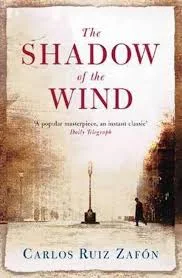
Shadow of the Wind by Carlos Ruiz Zafon


The Shadow of the Wind
by Carlos Ruiz Zafon is a beautifully written, magical story about life, love and the reader's relationship with story. 


It begins in 1945, post-Spanish civil war, with the protagonist Daniel Sempere being taken by his father to the Cemetery of Lost Books where he is told to choose a book in order to keep its spirit alive forever. Daniel chooses a book entitled The Shadow of the Wind by Julian Carax and in doing so he unknowingly and irrevocably ties his own life to Julian's.

I know this seems to be a common refrain in my reviews of late, but I hardly feel capable of doing this book any justice.

Zafon creates these most perfect characters. He goes so deep into their inner most thoughts and intricacies that it is hard to believe that the characters are just that; characters in the story. Not only were the characters so whole, the setting was so vivid that at times I felt as though I was lost in the rambling misty streets of Barcelona with the characters.

Without getting too sappy, I think that The Shadow of the Wind is in some ways a metaphor for the ability that some stories have to touch something inside us so much that the story itself becomes a little part of ourselves.

Despite how much I enjoyed almost every aspect of this book, there were two weaknesses for me. The first is that Zafon sometimes seemed a little too pompous in the way that he put forward his own social commentary. I am thinking particularly of Fermin's comments on television, where I felt as though I was reading the author's opinion rather than the characters. Fermin predicts that in the future people won't be able to fart for themselves because of the prevalence of television, and that we (people) won't die of the bomb but of banality. This felt to me to be a lot more of the author's opinion rather than the character's.

The second weakness for me was that towards the middle of the book I felt as though it was moving too slowly and I really needed something to happen soon, or I would lose interest in the story. Fortunately, as soon as I has that thought, the story really picked up and I was swept away all over again.

Zafon breathes a vividness and life into the his characters and setting in a way that I don't often come across. In his writing you can really sense his passion for the time honoured art of reading, and that passion is catching.


7 / 8: Brilliant, couldn't put it down. Everyone should read it. Recommend that you buy it.

What did you think of The Shadow of the Wind? Did you love it, or did you find that Zafon was a little too self-indulgent for your tastes?

Wide Sargasso Sea by Jean Rhys


I know that I will probably be in the minority when I say this – but Wide Sargasso Sea by Jean Rhys was boring. As you heard in my last review (of sorts), I loved Jane Eyre. It has gone straight into my list of favourite books of all time (you can see the others in my widget on the sidebar). So, as you can imagine with my newfound love of Jane Eyre and all the great things I had heard about Wide Sargasso Sea, I was very much looking forward to reading it.

Initially, I thought that it was going to be fabulous. The writing is amazing (I can't deny it and I don't want to) and the story seemed liked it was going to be equally as good. But as much as I could see the potential and admire the writing, I just didn't enjoy it.

Here are my biggest complaints: it was too slow. I felt like I had to push my way through the writing to get to the story (hope that makes sense) and when I got to the story nothing interesting was happening.

There was no resolution to any parts of the story. A friend of mine who read it at the same time as me thought that this could perhaps be explained by the fact that Rhys was making a comment on how everything is resolved so neatly in Jane Eyre, and she is probably right. Having said that, I am just someone that needs answers at the end of a story.

There were too many endnotes. You know the notes that you have to flick to the back of the book to read? So annoying. I don't want to flip backwards and forwards every few pages for explanations about what I am reading. It ruins the flow.

It was interesting reading about the colonial history of the West Indies as it is referred to, but not interesting enough make up for the slow-moving story.

I very much understand and identify with Rhys's fascination with 'the woman in the attic' in Jane Eyre'. I admit myself to not being at all satisfied with Rochester's explanation of the situation and I never felt quite like I had closure on that issue in Jane Eyre. Having said that, Wade Sargasso Sea didn't help me in any way to resolve me feelings towards the first Mrs Rochester's situation. I know Rhys didn't necessarily write it to provide me with closure, but it would have been nice.

I know that is all negative, so I am sorry for adding to the negative energy out there in the world, but it had to be said.


3 / 8: Couldn't get into it but I finished it because I felt like I should.


Do you think I am crazy and that this is actually a fabulous book? I think perhaps most people feel like that.


Originally posted 2 March 2011 page Turners

Disgrace by J. M. Coetzee


JM Coetzee's 1999 Booker Prize winner Disgrace is a simply told story with a powerful message, and worthy of the accolades it has received.


I expected something special from Disgrace, which is an exploration of racial politics in post-apartheid South Africa, but I find that I have a lot less to say about this book than I expected.

David Lurie is a middle aged, divorced bachelor who finds himself unceremoniously out of his university teaching job following an affair with a student. He is a wretched character, someone whom I found difficult to respect. Finding himself in disgrace, he goes to stay with his daughter Lucy on her country farm, where she grows vegetables and cares for abandoned animals.

Here, he finds himself and his daughter victim of atrocities committed against them in a home invasion and they both struggle to deal with the consequences in their different ways.

David cannot come to terms with the events that have had such an impact on their lives, particularly Lucy's. Lucy quietly accepts what has been done to her as the price that she has to pay for staying on the land that he white ancestors once so barbarically took from the original inhabitants of the land. This doesn't mean that she isn't a changed person by what has happened to her, but she is unwilling to move from her home in the wake of the horrible events. David cannot comprehend her attitude, urging her to move away for fear of further attacks.

Disgrace is about misery and reconciliation on a personal as well as a political level. Coetzee creates a depressing picture of a land full of hate and misery attempting to cope with political change and racial politics.

There is a lot more to say about JM Coetzee's Disgrace that I am not able to adequately discuss in this review.

For the first time ever, I am not going to give this book a rating out of 8 according to my usual practice because I feel so ambivalent towards this book, and I really can't explain why.


Is this feeling of ambivalence unique to me? I would love to know what other people think of this well-known book.


Originally posted 17 February 2011 Page Turners

The Broken Shore by Peter Temple


The Broken Shore
is the precursor to Truth, the first crime novel to win the Miles Franklin Award, and so I was excited to be finally reading it. This is, however, the second Peter Temple book that I have read (An Iron Rose being the first), and whilst I very much enjoyed The Broken Shore, it was very reminiscent of An Iron Rose in terms of the characters, the setting and the plot.

The main character of this book is Joe Cashin, an ex-homicide detective who becomes involved in the investigation of the death of Charles Burgoyne, a local man of large wealth. His death is blamed on some young Aboriginals from the town, but Joe soon discovers that there is something more sinister behind the killing of Charles Burgoyne and the killings that follow.

The same comments that I made about An Iron Rose equally apply to this book. Temple's writing is very spare and gritty. He writes in the hardboiled style made famous by Hammett and Chandler. In fact, the main character in The Broken Shore, Joe Cashin, was very Marlow-esque. He was a complicated character. He had the hardness of an ex-homicide police officer, but was clearly enjoying being in a role where he could exercise his discretion and common sense without all the action.

Temple is skilled at capturing detail despite his spare writing style, and is able to effectively use dialogue to give the story and setting a distinctly Australian setting.

The good thing about The Broken Shore is that not only was he able to capture detail so well but he also covered many important political issues such as crime and justice, police corruption, Aboriginal politics, environmental protection and institutionalised sexual abuse.

I enjoyed The Broken Shore, although it moved very slowly and was worryingly similar to An Iron Rose, from my perspective anyway. I am now looking forward to reading Truth and seeing how it is distinct from these novels.


6 / 8 stars: Enjoyable and well-written. I would recommend it.


Do you ever feel a little bit worried when you read a book that is very similar to other books the author has written? If this were your ordinary crime fiction it perhaps wouldn't bother me, but Temple's writing can just as equally be considered literary fiction as it can crime, I think that I expect something a bit more original from a writer of literary fiction. What do you think? Have you read any more of Temple's writing than me and have a better idea of the distinctions between each of his novels?

Originally posted 8 February 2011 Page Turners

Fugitive Pieces by Ann Michaels


Fugitive Pieces
by Ann Michaels is a stunning piece of historical fiction that I both admired and was frustrated by.


It tells the story of people whose lives have been affected by the holocaust in some way. In fact, the book is told in two pieces; the first is narrated by a survivor of the holocaust, and the second by someone whose parents were affected by this historical disaster.

The first and main narrator is Jakob, a Jewish boy from Poland who finds himself hiding in the woods after his family and killed and taken to camps. He is rescued by a liberal minded Greek archaeologist Athos who hides Jakob throughout the war and raises his as his own son. The book follows Jakob as he reaches adulthood and he and Athos move to Canada and start a new life there.

The second narrator is a young man named Ben, who was born in Canada to parents who were themselves fugitives from the war torn Europe. Ben greatly admires Jakob's poetry and having met Jakob once, feels as though Jakob has had a significant impact upon his life.

There are definitely aspects of this book that I greatly admire; the most significant being the writing. The writing is vivid and flowing, it almost feels as though you are reading poetry rather than a novel. This style is perfectly suited to the task of exploring the effect of war on people who find themselves fugitives in some way or another from the disaster that it creates.

Having said that, this novel failed to win me over.

At times a little too much was left to the imagination. I felt as though there was very little story actually taking place. This in a way makes sense because you are primarily watching Jakob's life unfold - but the reality is just watching someone's life unfold in pretty uninteresting. That's why in fiction there is usually a plot to keep the story moving along. The book needed more story, it was just really slow at times.

Whilst I appreciated the idea behind having the two narrators, in the end I found it unsatisfactory and unnecessary. Jakob narrates almost the entirety of the book, and it is not until right at the end that the second narrator takes over. By that time, I had spent so much time reading about Jakob that I wasn't interested in what someone else had to say about him, especially someone seemingly so totally unconnected with him.

Fugitive Pieces won the Guardian Fiction Award in 1997 as well as the Orange Prize in 1997. It is undoubtedly a good book, with beautiful writing and important messages.

However, whilst I greatly admire the idea behind the story and Michaels's poetic writing, the story itself lacked enough content to thoroughly satisfy me.


5 / 8:
Good and worth reading if you have the opportunity, but there is no need to prioritise it.


I would be greatly interested to know if anyone else has read this book and felt as unsatisfied as I did, despite being able to acknowledge how wonderfully it is written?


Originally posted 19 January 2011 Page Turners